
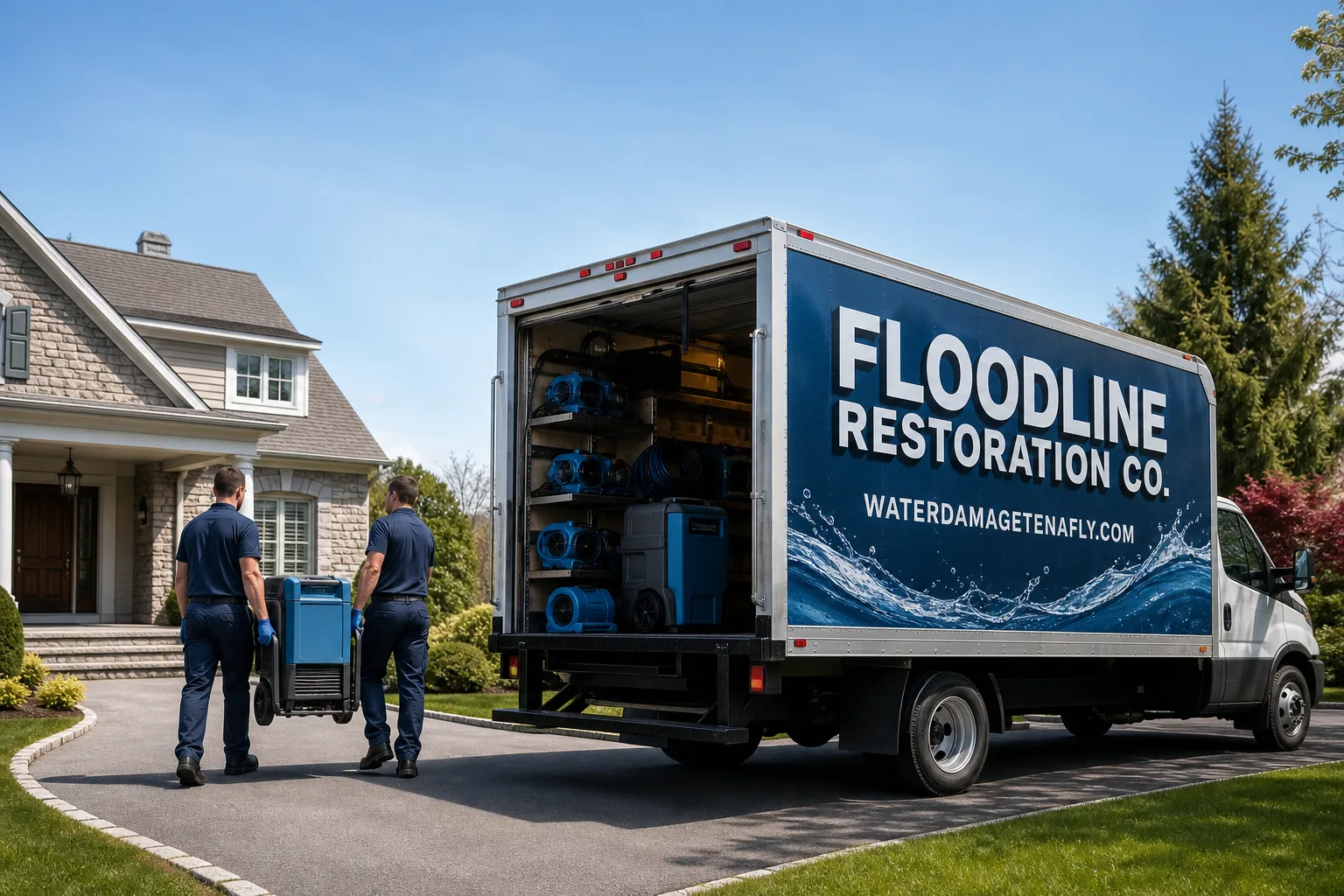
Free visual inspection and a written scope of work before any mitigation begins - photos, moisture readings, and drying logs go in your claim file
The scope we write is the scope we bill. Anything new gets shown to you, in writing, before we touch it.
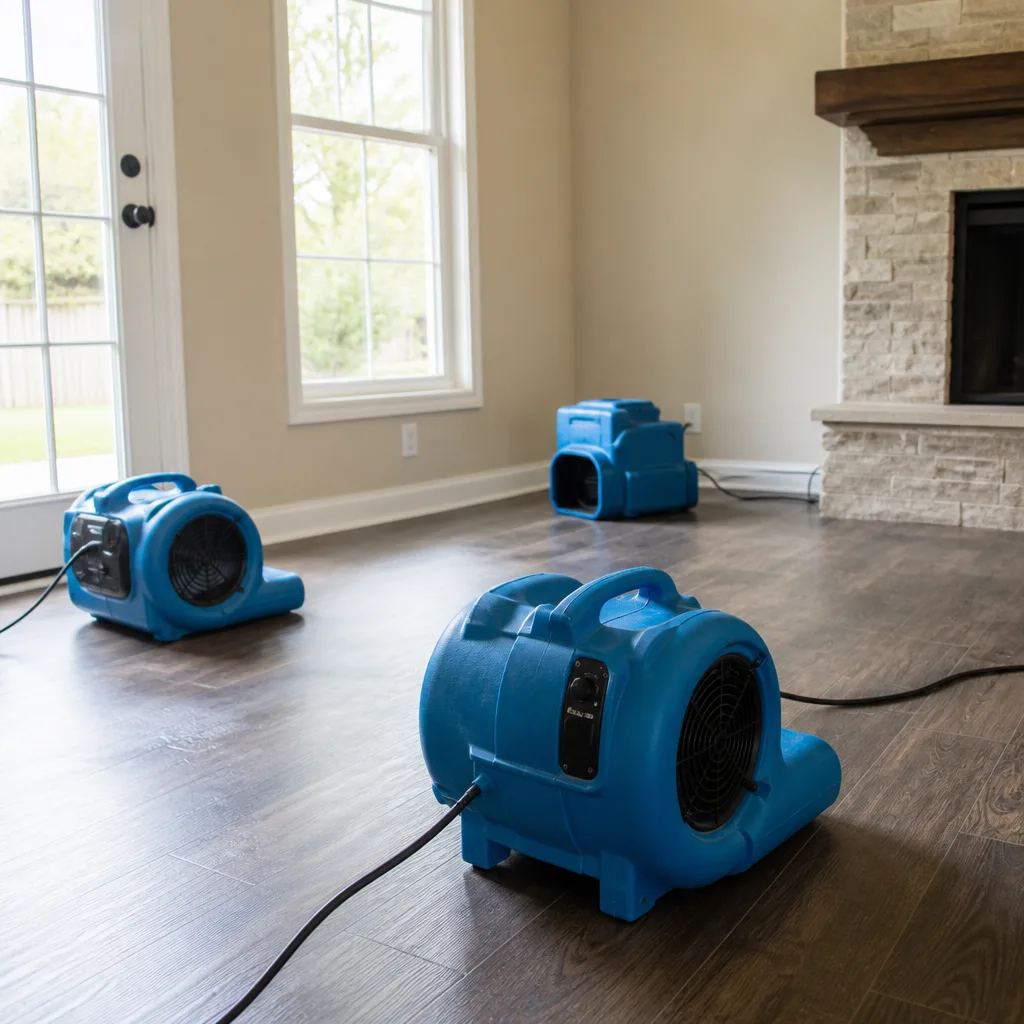
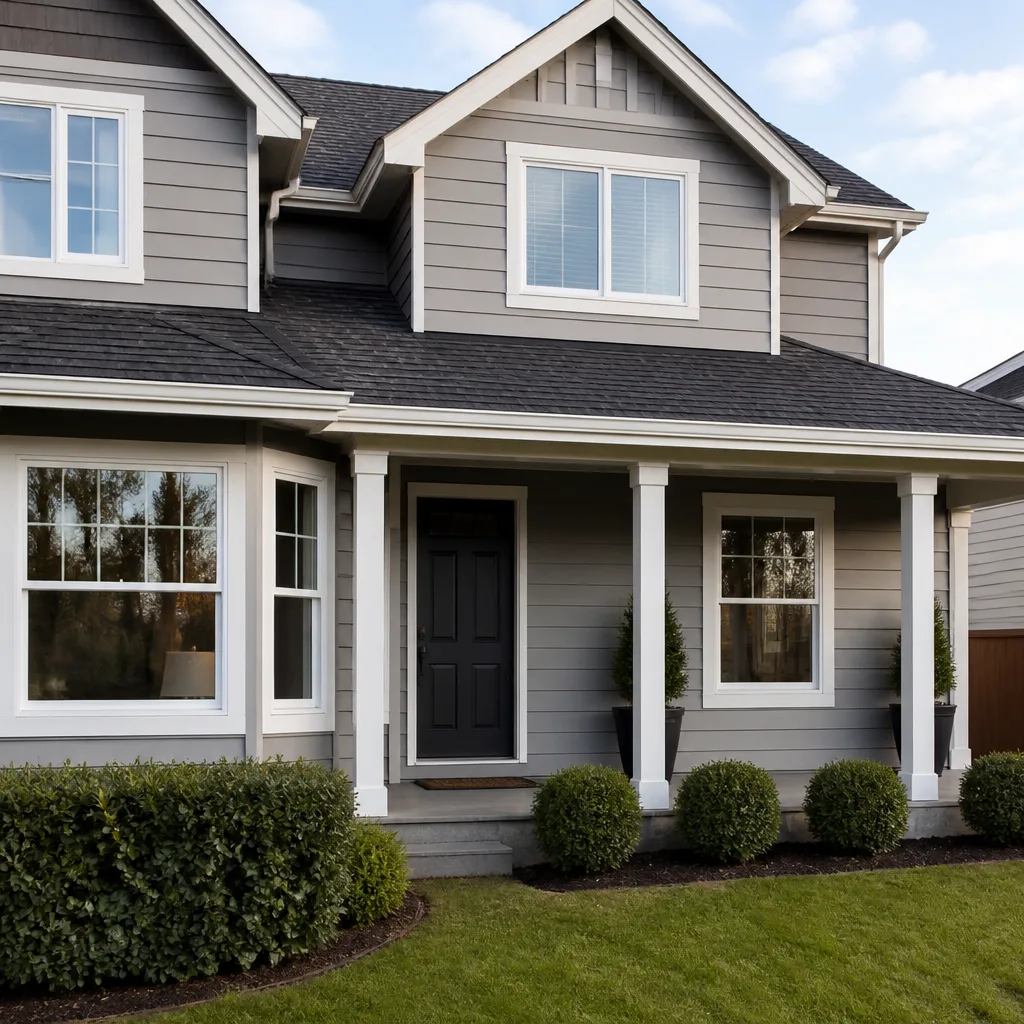
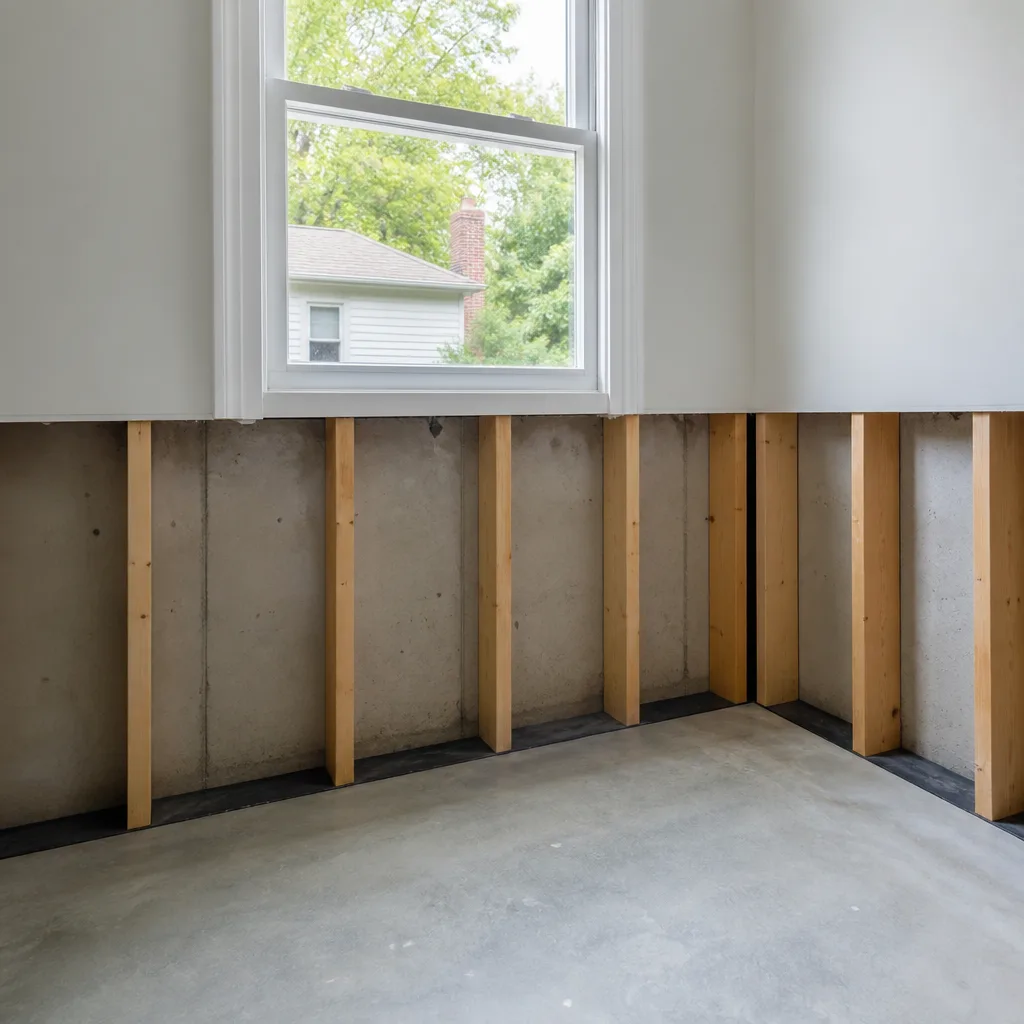
 Before
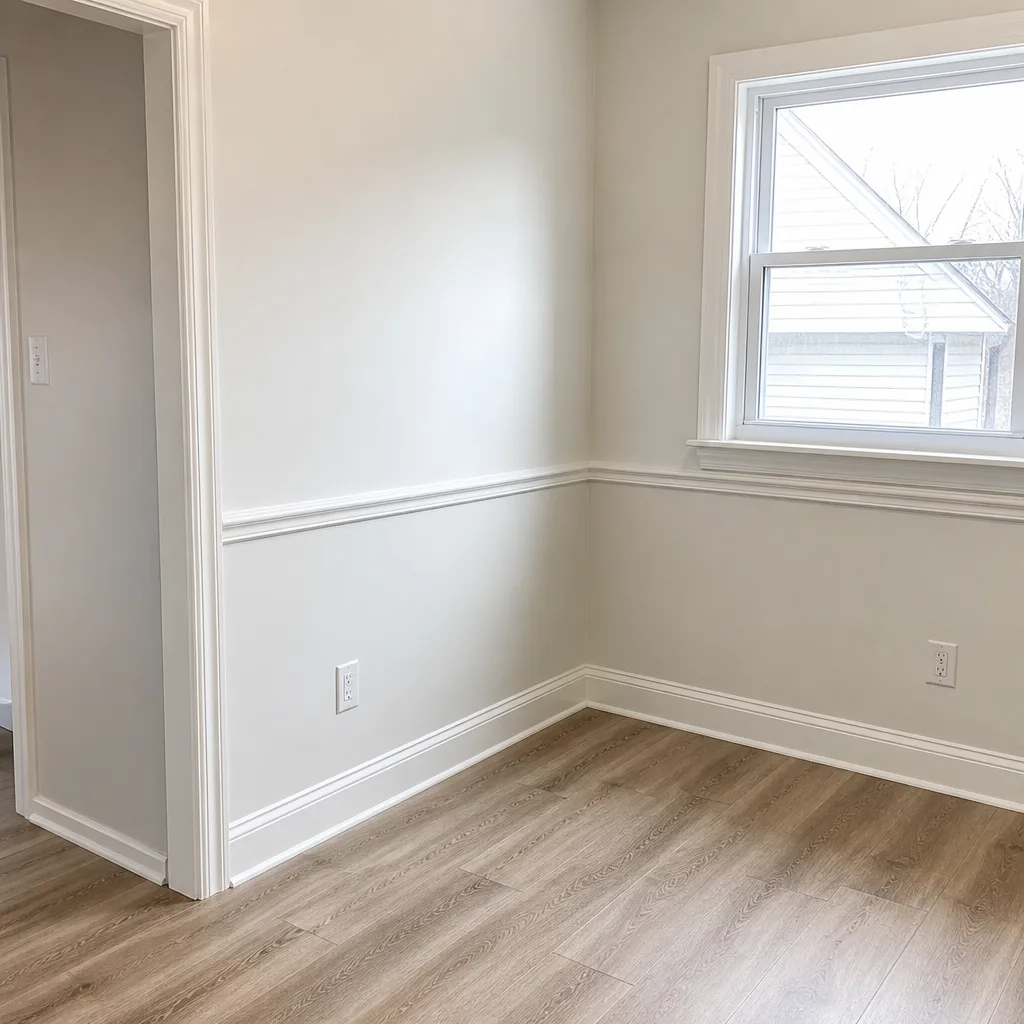 After
After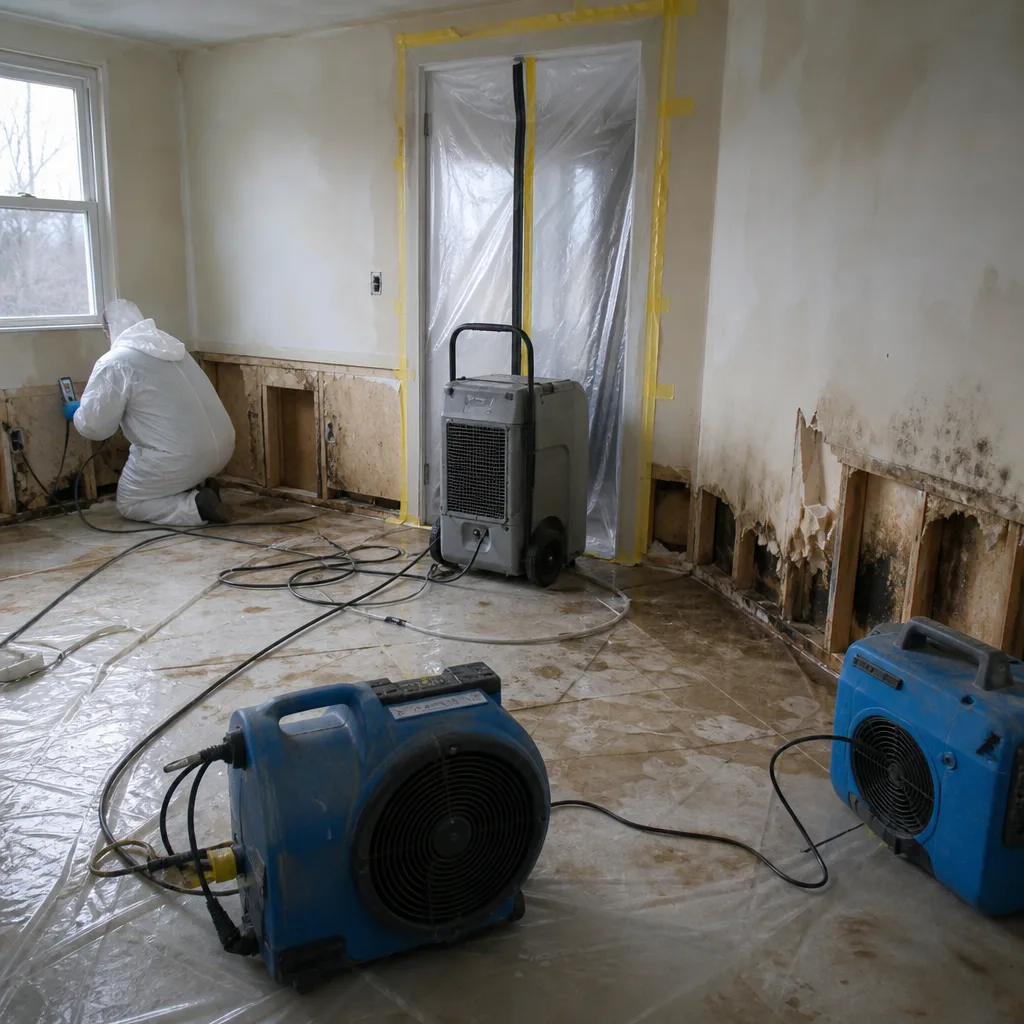 Before
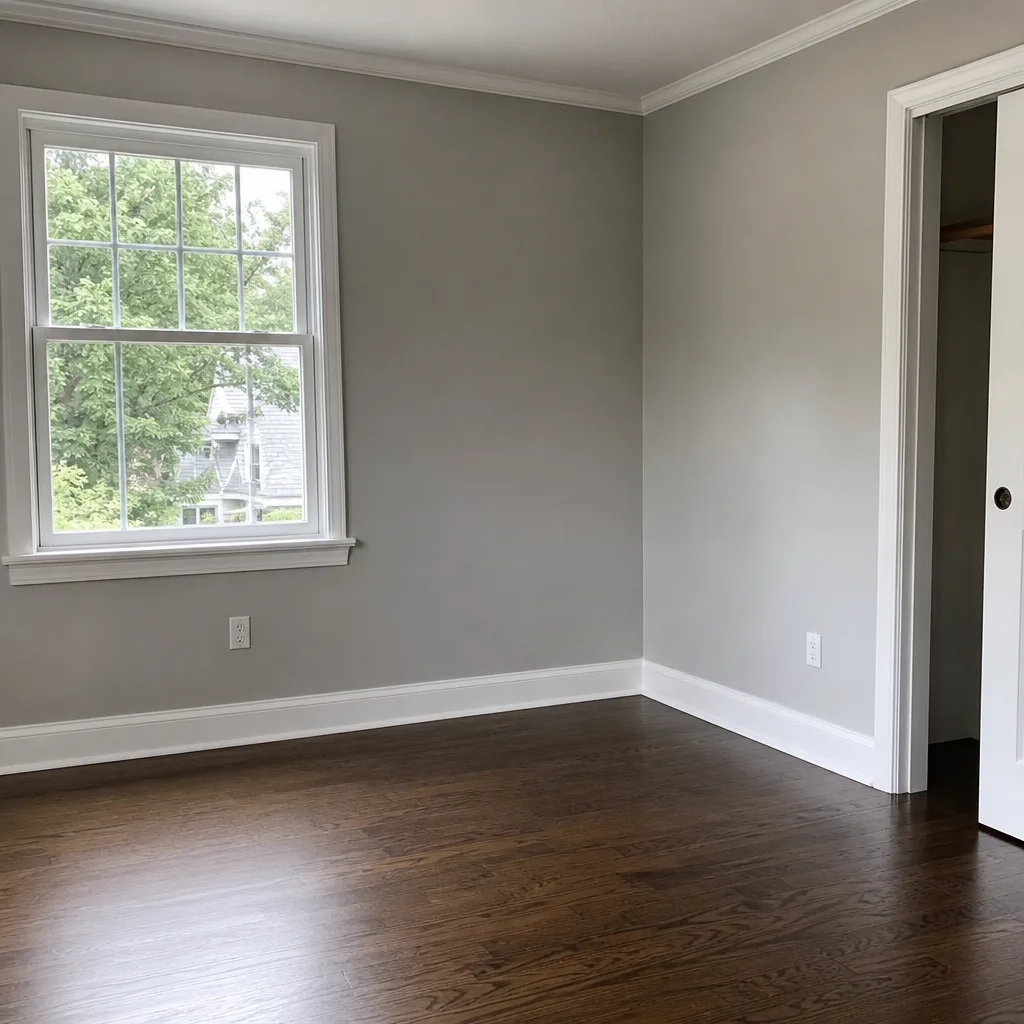 After
After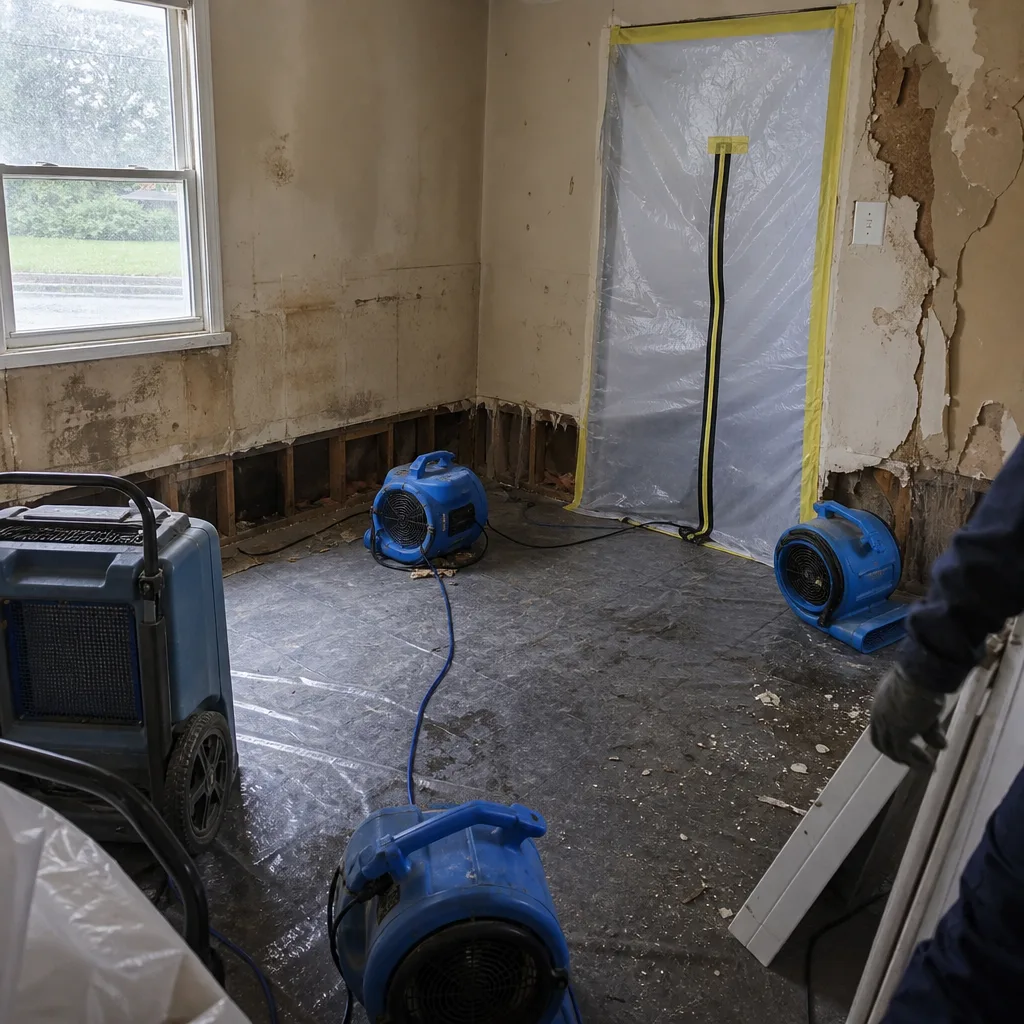 Before
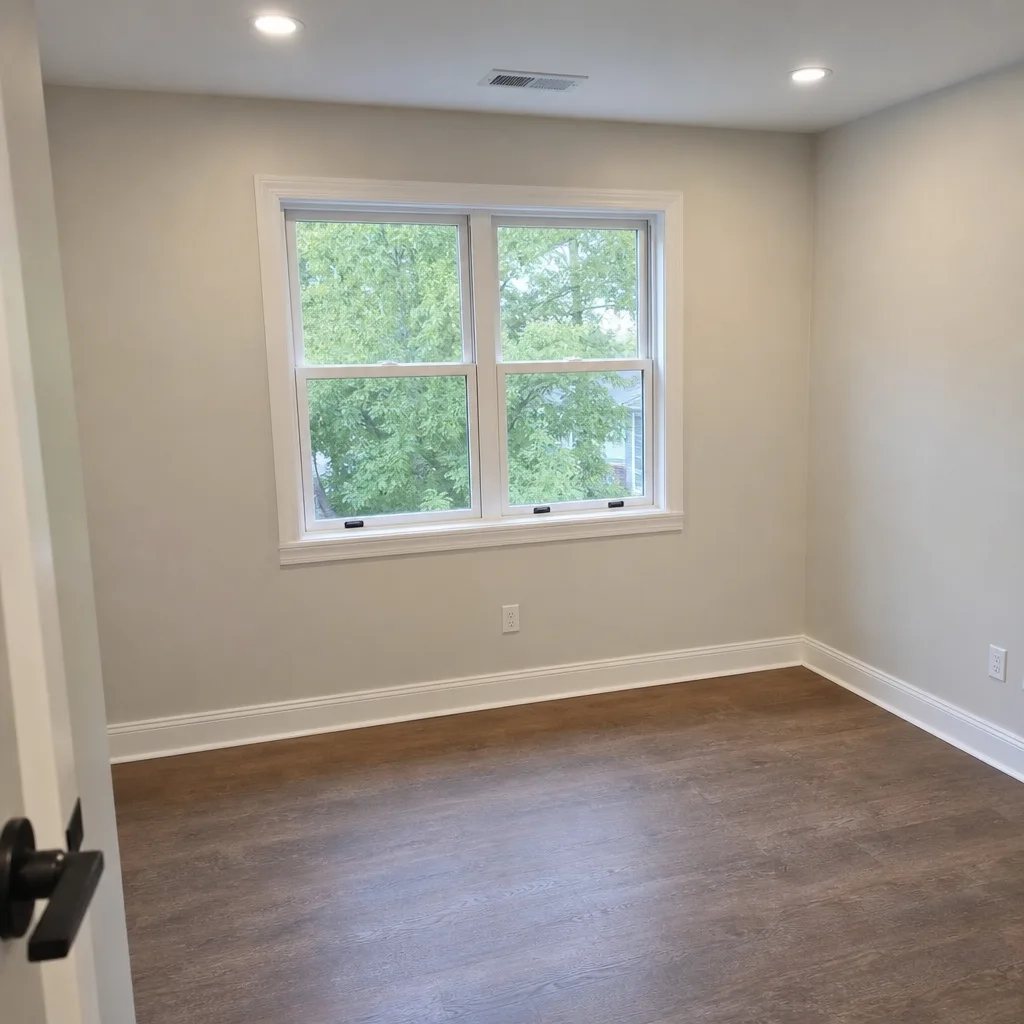 After
After24/7 Emergency Mold Remediation in Haworth
Mold remediation in Haworth typically runs $1,400-$4,200 for a contained basement job, with inspection-only visits starting around $300. Our crews reach Haworth homes within 45 minutes of your call, and a live person answers at (551) 348-3742 any hour, any day. Mold does not wait for business hours, especially after Pascack Brook climbs its banks and water finds its way into finished basements along the lower streets. The first hour matters because mold colonies in warm, damp wall cavities expand fast, and what starts as a visible patch on drywall is frequently only the surface of what is behind it. We do a free visual inspection, map the moisture, and tell you honestly what needs to be done. No sales script. No pressure. Just a straight answer from a crew that has worked Haworth homes for years.
Understanding Mold Remediation Severity in Haworth Properties
Mold problems in Haworth break into categories based on the water source that started them, and that matters for how we handle the job. Category 1 water comes from a clean source like a burst supply line under a kitchen sink. Category 2 carries contaminants from appliances or sump pits. Category 3 is what we see most often along the creek-adjacent streets, where Pascack Brook overflows into basements and brings silt, bacteria, and organic matter with it. Category 3 water demands containment, not just drying, because the walls it saturates become a breeding ground for mold behind the surface. In Haworth’s 1940s-to-1970s Colonials and split-levels, moisture moves through plaster-and-lath and original wood framing differently than in drywall-on-stud construction. Plaster holds water longer. Framing behind it stays damp for weeks if the prior event was never properly dried, just refinished. That is the single most common severe mold condition we find in this borough: an old colony behind original paneling or plaster that reactivates every time the basement sees water again. We classify severity by moisture readings, spore type, and the square footage of affected material, then build the containment plan around those numbers.
Why Haworth Property Owners Choose Floodline Restoration Co.
- 45-minute response commitment: Our Haworth-area crews are dispatched from nearby and arrive fast, with equipment on the truck so containment and drying start the same visit.
- 24/7 live answer, every call: You call, a person picks up. Not a recording. Not a callback service. At 2 a.m. after a spring storm, you get a dispatcher who knows the valley streets and can move a crew toward you immediately.
- IICRC-certified technicians: Our crews hold IICRC certifications including WRT and AMRT, and they follow the containment and air-scrubbing protocols those standards require. Background-checked and uniformed, every job.
- Free visual inspection: We look at the extent of visible mold, take moisture readings, and tell you what we found, what we would do, and what it costs. No charge for the visit and no obligation.
- Direct insurance billing: We document from the first hour, write the scope, and bill your carrier directly. You are not the messenger between us and the adjuster.
- One team, start to finish: The same crew that contains the mold performs the drying, the cleaning, and the rebuild. No mid-job handoff to a subcontractor you never met.
Our Mold Remediation Process
Inspection & Assessment
We walk the affected areas, take thermal imaging and moisture readings with hygrometers, and identify the water source still feeding the growth. In Haworth, that often means a failing French drain or a foundation crack letting creek water wick through the wall. We give you a written scope before any work starts.
Extraction/Stabilization
If standing water is present, we extract it immediately and stabilize the area. This stops the active water feed and prevents contamination from spreading to dry zones of the basement.
Drying & Dehumidification
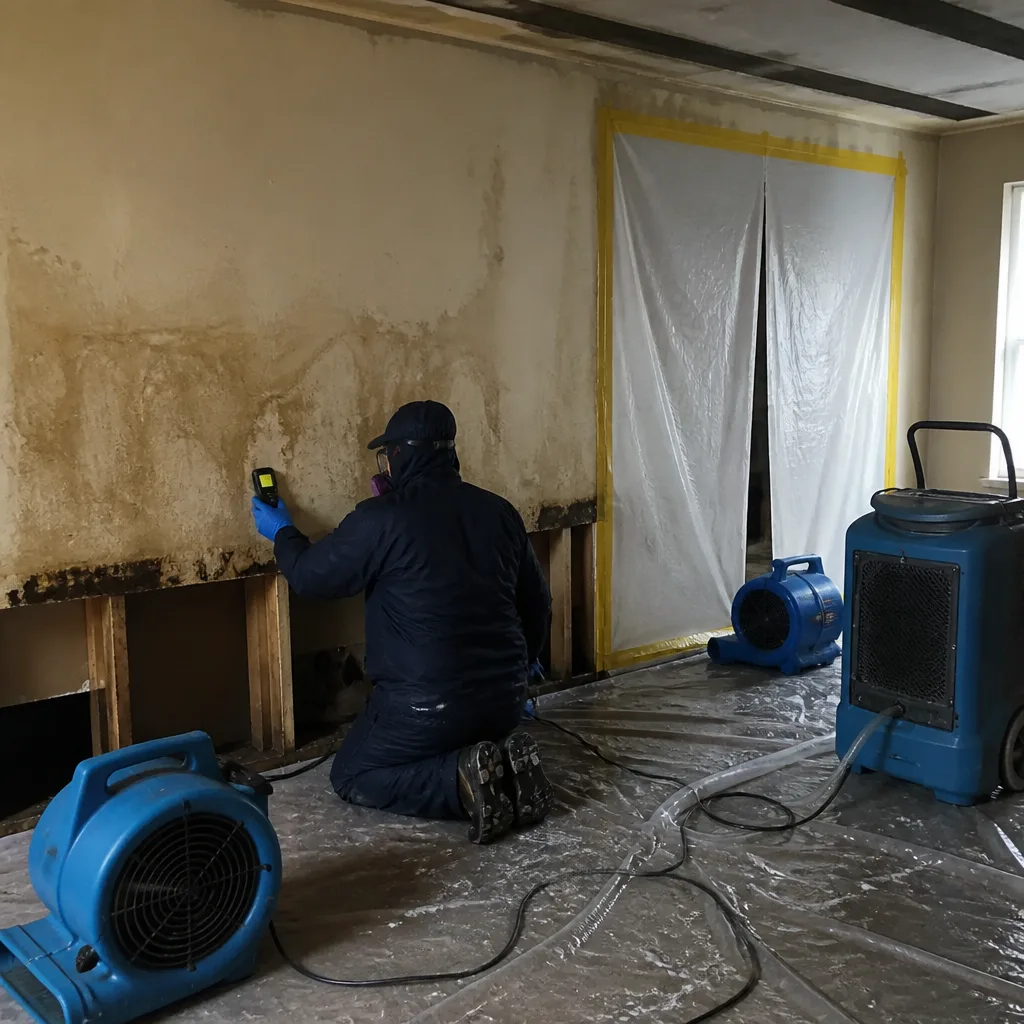
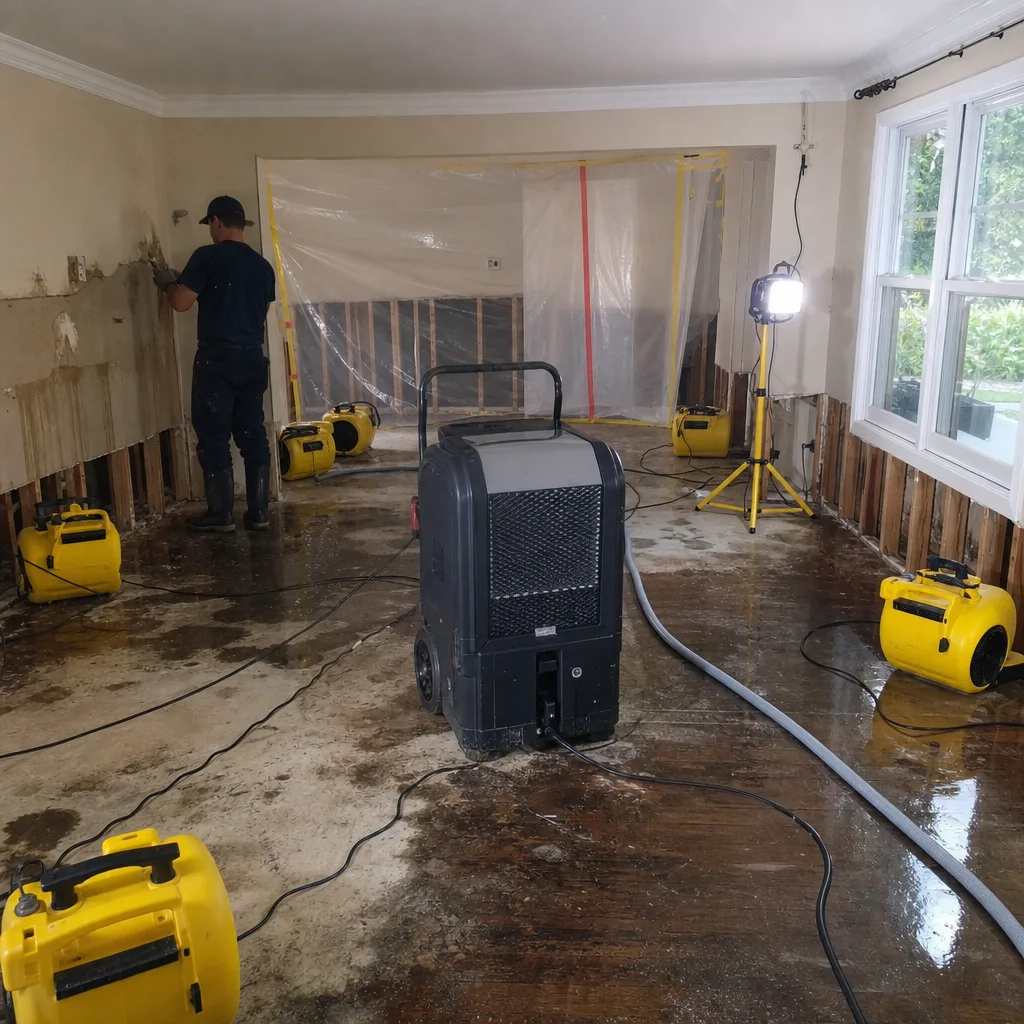
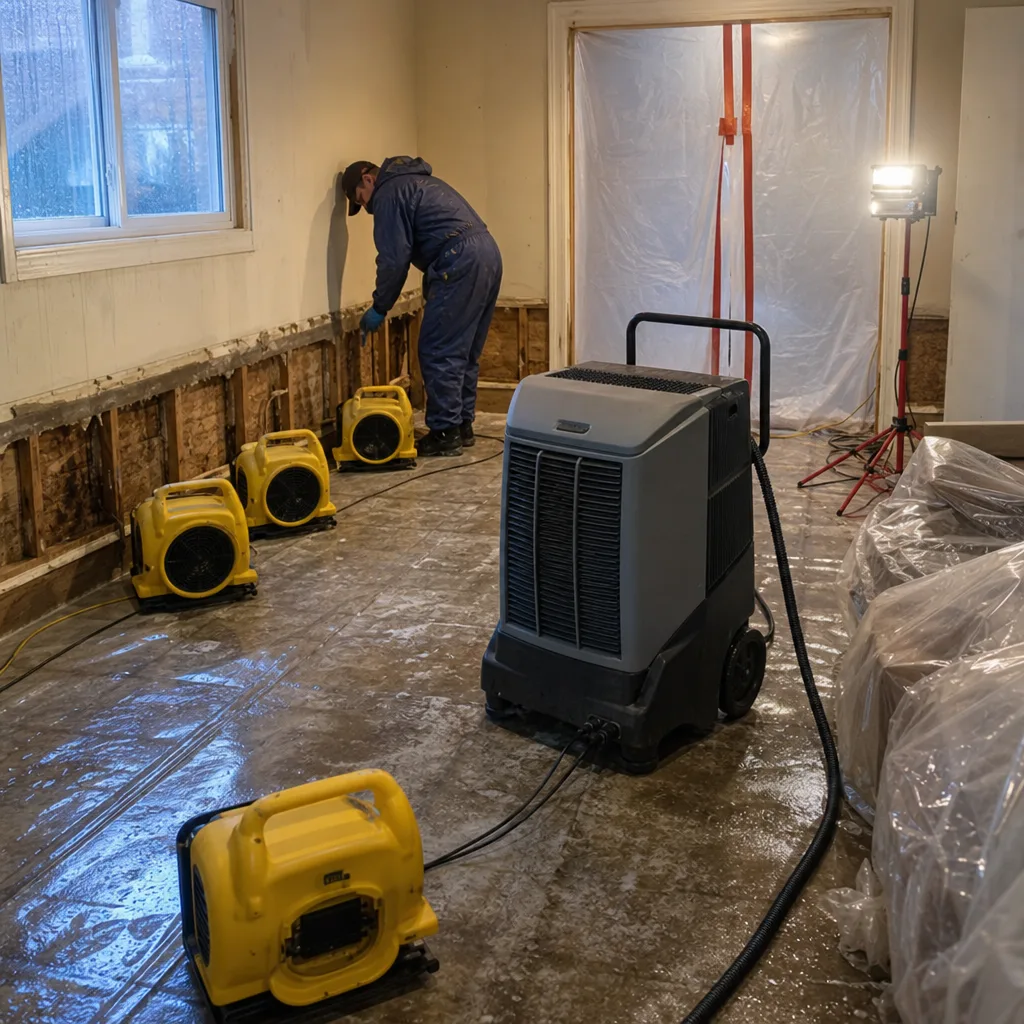
We set up containment, run HEPA air scrubbers, and place Dri-Eaz dehumidifiers and XPOWER air movers against the affected walls. Daily readings are logged until every surface reaches the dry standard, and that log is shared with you and your insurer.
Cleaning & Sanitization
Non-salvageable materials are removed under containment. Salvageable framing, masonry, and flooring are treated with antimicrobial products according to IICRC standards. Air scrubbers stay running through this phase to catch airborne spores.
Specialty Treatment for Haworth Crawl Spaces
In older Haworth homes, crawl spaces trap humidity against floor joists and subflooring. We treat the exposed wood, install vapor barriers where appropriate, and recommend long-term moisture control so the mold does not return next spring.
Repairs & Restoration
We rebuild what was removed, matching as closely as possible to the existing construction era of the home. Colonial trim, Cape Cod paneling, split-level stairwells, we handle the finish work with the same crew that started the job.
Need Emergency Mold Remediation in Haworth Now?
Crews minutes away, answering live 24 hours a day. The sooner we start, the less it costs.
Working With Your Insurance Company
Mold remediation claims succeed or fail on documentation, and we build that file from the first hour. We photograph every affected room, log moisture readings daily, and write a line-item scope of work your adjuster can verify against the loss. If your Haworth policy covers mold remediation as a resulting damage from a covered water event, we handle the correspondence directly and bill the carrier. You should never be the person translating between the restoration crew and the insurer. We have handled enough claims on creek-adjacent properties to know what carriers ask for and how to provide it the first time.
What We Provide Your Insurer
- Thorough documentation of the loss
- Photos of all damage, room by room
- Moisture readings and drying logs
- A detailed, line-item scope of work
- Direct coordination with your carrier
Built for Haworth’s Loss Calendar
Mold in Haworth follows a seasonal pattern, and local homeowners learn it the hard way. Late winter and early spring bring freeze-thaw cycles that open hairline cracks in older foundation walls, letting groundwater seep into basements along Lake Shore Drive and the streets that slope toward Pascack Brook. Spring rain and nor’easter runoff push the brook over its banks in low-lying sections, soaking finished basements and saturating the plaster-and-lath walls common in the borough’s 1940s-to-1970s stock. Summer humidity keeps damp wall cavities from drying on their own, and that is when old colonies behind original paneling start showing themselves. Fall brings the next round of heavy rain, and the cycle repeats. If your basement has flooded once in Haworth, the mold risk is not over when the water is pumped out. It is just dormant, waiting for the next humid season. That is why we recommend a moisture audit after any water event, and why we keep our Haworth schedule flexible for the spring and fall window.
Mold Remediation Across Haworth’s Neighborhoods
Haworth is a compact borough, but the mold patterns shift block by block. The homes along Sunset Avenue and the streets running downhill toward Pascack Brook see the most recurring basement saturation. Properties up near Haworth Public School and along Valley Road tend to sit higher and dry faster, but they share the same aging French drains and original foundation walls as the rest of the borough. The split-levels over near the Haworth Country Club often have finished lower levels that were converted decades ago, with paneling and drywall installed directly against foundation walls that were never waterproofed by modern standards. Along Lake Shore Drive, we have worked homes where the finished basement sits below the seasonal water table, and proper remediation means addressing both the mold and the water pathway feeding it. Each neighborhood has its own rhythm, but the underlying story in Haworth is consistent: older construction, wooded lots, and a creek that periodically reminds the lower streets who is in charge. Our crews know these blocks, the response routes, and what to expect behind the walls.
Specialized Mold Remediation Services We Offer in Haworth
Mold Inspection & Testing
We start with a visual inspection and moisture mapping of the affected rooms, then recommend testing only where it adds real information. In Haworth homes with a past flood history along Pascack Brook, air sampling can confirm whether hidden colonies are releasing spores into the living space. The report tells you what is present, at what levels, and where the moisture source is.
Mold Removal
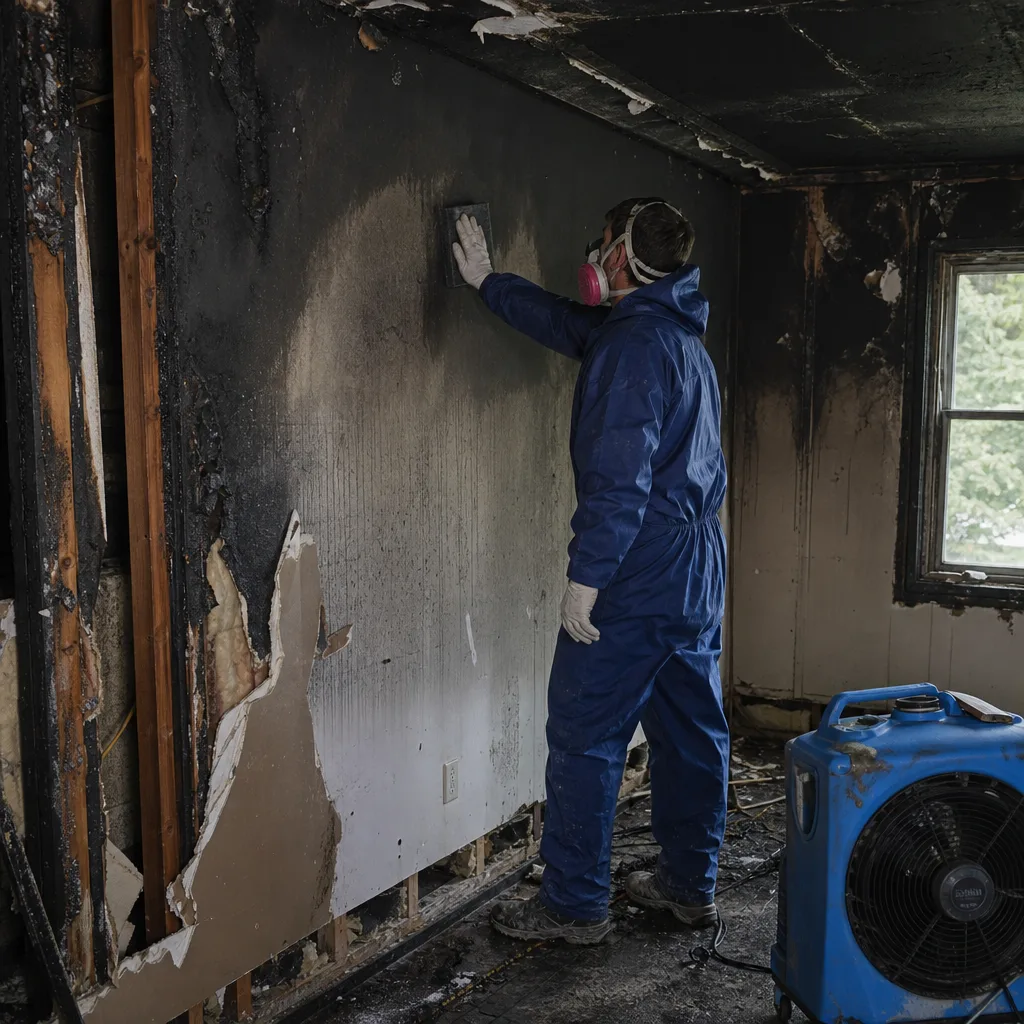
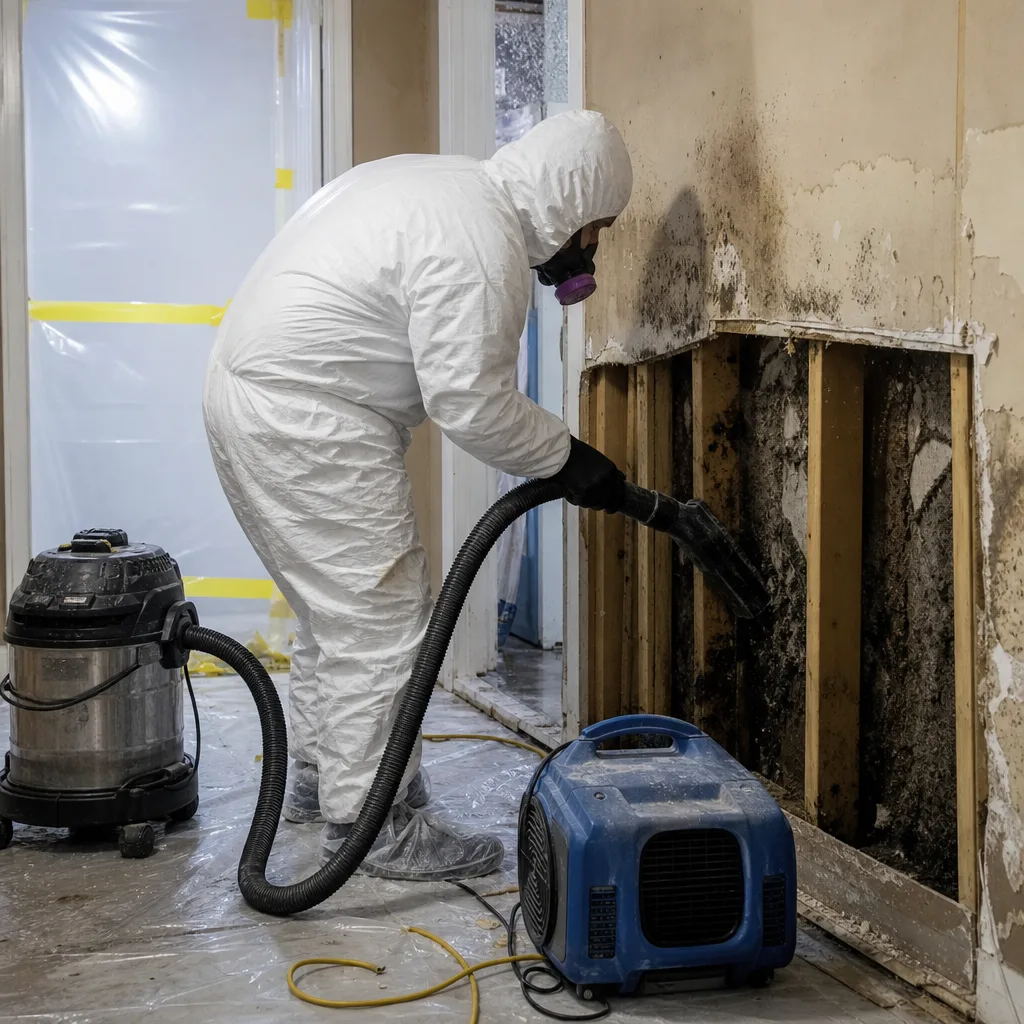
Removal means physically taking out the contaminated material, not just treating the surface. That often includes wallboard, baseboards, carpet pad, and in older Haworth homes, deteriorated plaster sections. Under containment we remove the affected material, bag it for disposal, and clean the remaining framing and masonry. The room is left dry, clean, and ready for repair.
Black Mold Remediation
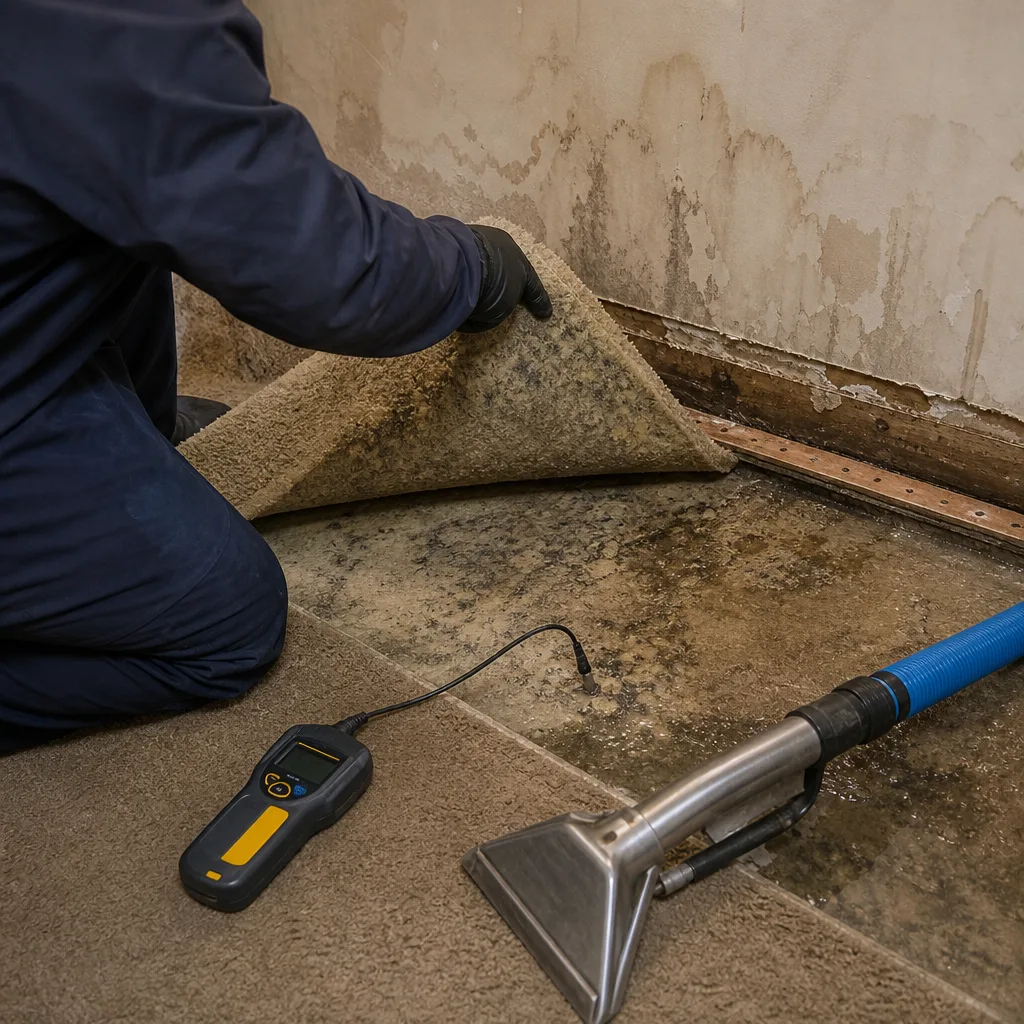
Black mold, typically Stachybotrys chartarum, thrives on chronically wet cellulose materials like drywall and wood. In Haworth, we commonly find it in basement ceiling cavities where a slow plumbing leak or creek seepage has gone unnoticed. Treatment requires strict containment, air scrubbing, and complete removal of the saturated material. This is not a surface-wipe job, and no legitimate crew will frame it as one.
Air Quality Restoration
After remediation, the air should be cleaner than before the problem started. We run HEPA air scrubbers throughout the project and can perform post-remediation verification to confirm spore counts have returned to normal background levels for a Haworth home. This matters for anyone with allergies, asthma, or an immune condition.
Crawl Space Treatment
Haworth’s older homes frequently have crawl spaces with exposed dirt floors and minimal ventilation. Bergen County’s humid summers push moisture against the floor joists overhead, and mold develops on the wood surface. We treat the framing, remove contaminated insulation, and recommend vapor barrier and dehumidification solutions so the space stays dry through every season.
What happens when you call
- 1
A real person answersNo phone trees - you reach a local pro.
- 2
You get an upfront price rangeHonest numbers before anyone is dispatched.
- 3
A background-checked tech heads outLicensed & insured, dispatched right away.
- 4
You approve before work beginsNothing starts until you say go.
Mold Remediation Costs in Haworth, NJ
You should know the numbers before anyone opens a wall. A containment-and-removal job in a single Haworth basement room typically runs $1,400-$2,800. A full basement with multiple affected walls and finished surfaces lands between $3,200 and $4,800. Inspection and moisture mapping without remediation runs $300-$500. Testing, if needed, adds $200-$600 depending on the number of samples. Crawl space treatment in Haworth’s older homes runs $1,800-$3,500 when insulation replacement is included. What moves the price is the square footage of contaminated material, whether Category 3 water was involved, and whether asbestos testing on pre-1980s floor tiles or pipe insulation is required before demolition. The free visual inspection gives you a firm scope in writing, and we never start work without your sign-off on the number. If insurance is covering the loss, we bill the carrier directly and you see the same scope we submitted.
We Also Serve Cities Near Haworth
Floodline Restoration Co. serves homeowners across the northern Pascack Valley and surrounding Bergen County. In addition to Mold Remediation in Haworth, our crews respond daily to Dumont, Demarest, Closter, and Cresskill. Same 45-minute response commitment, same live dispatch, same written guarantee on every job.
Haworth Mold Remediation Questions, Answered
How quickly can mold grow in a Haworth basement after Pascack Brook floods?
Mold can begin colonizing saturated drywall and organic surfaces within 24 to 48 hours in warm conditions, and Haworth’s humid summers accelerate that timeline. After a creek flood, the window to extract water and begin structural drying is measured in hours, not days. Call (551) 348-3742 the moment you see water, and we will have containment set before the colony gets established.
Does a past water event behind original 1960s paneling mean the mold is still active?
Frequently yes. If the prior event was not dried to the building material’s dry standard, the cavity behind original paneling stays damp enough for spores to survive and reactivate. Bergen County’s summer humidity keeps those cavities moist. We find this pattern repeatedly in Haworth split-levels and Colonials, and it requires opening the paneling under containment to verify what is behind it.
Which is more important to fix first in a Haworth split-level: the mold or the failing French drain?
The drain comes first, or it comes with the mold. If water is still entering the basement through a failed French drain, remediating the mold without fixing the water pathway guarantees a repeat event. We coordinate both: remediate the affected material under containment while the drainage and grading are corrected so the same wall does not get wet again next spring.
What water category from a Haworth creek backup requires removing drywall instead of drying it?
Category 3 water, which includes creek overflow carrying silt, bacteria, and organic matter, requires removal of porous materials like drywall, carpet, and insulation. You cannot safely dry Category 3-saturated drywall in place. The material must be cut out, the cavity cleaned and dried, and the wall rebuilt.
Can mold hide behind plaster-and-lath walls in Haworth’s older Colonials without visible staining?
Absolutely. Plaster-and-lath walls hold moisture for long periods and often show no surface staining until the colony behind them is substantial. If your Colonial has a history of basement seepage along the foundation wall, we recommend a moisture check even when the wall looks clean. Thermal imaging and probe readings tell us what is behind the plaster before you ever see a spot.
How fast can someone actually get to my Haworth home?
Our dispatch commitment is 45 minutes from call to arrival for Haworth addresses. A live person takes your call, confirms the address, and moves the nearest available crew toward you immediately. At 6 p.m. on a Tuesday or 3 a.m. after a nor’easter, the process is the same.
Will insurance cover mold remediation in Haworth?
That depends on your policy and the source of the water. Mold remediation is often covered when it results from a covered water event, like a sudden pipe burst or a storm-related backup. Pre-existing mold from long-term seepage is frequently excluded. We document the cause, the timeline, and the scope in a way your adjuster can work with, and we bill the carrier directly. Bring us the policy, and we will help you understand what applies.
What should I do in the first 30 minutes after finding mold in my Haworth basement?
Shut off the water source if there is an active leak, then do not disturb the mold. Leave it alone. Agitating a mold colony releases spores into the air and spreads contamination to clean rooms. Keep family members and pets out of the area, do not run HVAC fans that move air through the house, and call (551) 348-3742 for a free inspection. The faster we assess it, the smaller the job stays.
Serving Haworth, NJ - Our Local Coverage Area
We’re based in the Haworth area and know this community well. Use the map below to see our service coverage - if you’re nearby, we can almost certainly help.
Why Pascack Brook Changes the Mold Picture in Haworth
Haworth sits in the Pascack Valley with Pascack Brook running through its lower sections, and that geography shapes every mold problem we see in the borough. When the brook rises, it saturates the soil against foundation walls in the creek-adjacent streets, and that water wicks into the plaster-and-lath and paneling common in the borough’s 1940s-to-1970s housing stock. The visible damage may dry in days, but the wall cavity stays damp for weeks, and Bergen County’s humid summers keep the moisture load high enough for spores to survive. That is why Haworth sees a recurring reactivation cycle that flatter Bergen County communities to the east do not experience the same way. A basement that was refinished over a prior flood event is not a clean room with a new coat of paint. It is a time bomb with the fuse already lit behind the wall. Our job is to find what the last guy missed, remove it, and make sure the wall cavity is dry enough that it stays dead. The 90-Day Done Right Promise covers this work in writing. If it is not done right, we make it right. No arguing, no paperwork battle. That is the standard, and it is the same in every Haworth home we enter.
Written by Curt Bowman, Owner at Floodline Restoration Co. Serving Haworth and the Pascack Valley with Mold Remediation since 2010.