
Free visual inspection and a written scope of work before any mitigation begins - photos, moisture readings, and drying logs go in your claim file
The scope we write is the scope we bill. Anything new gets shown to you, in writing, before we touch it.



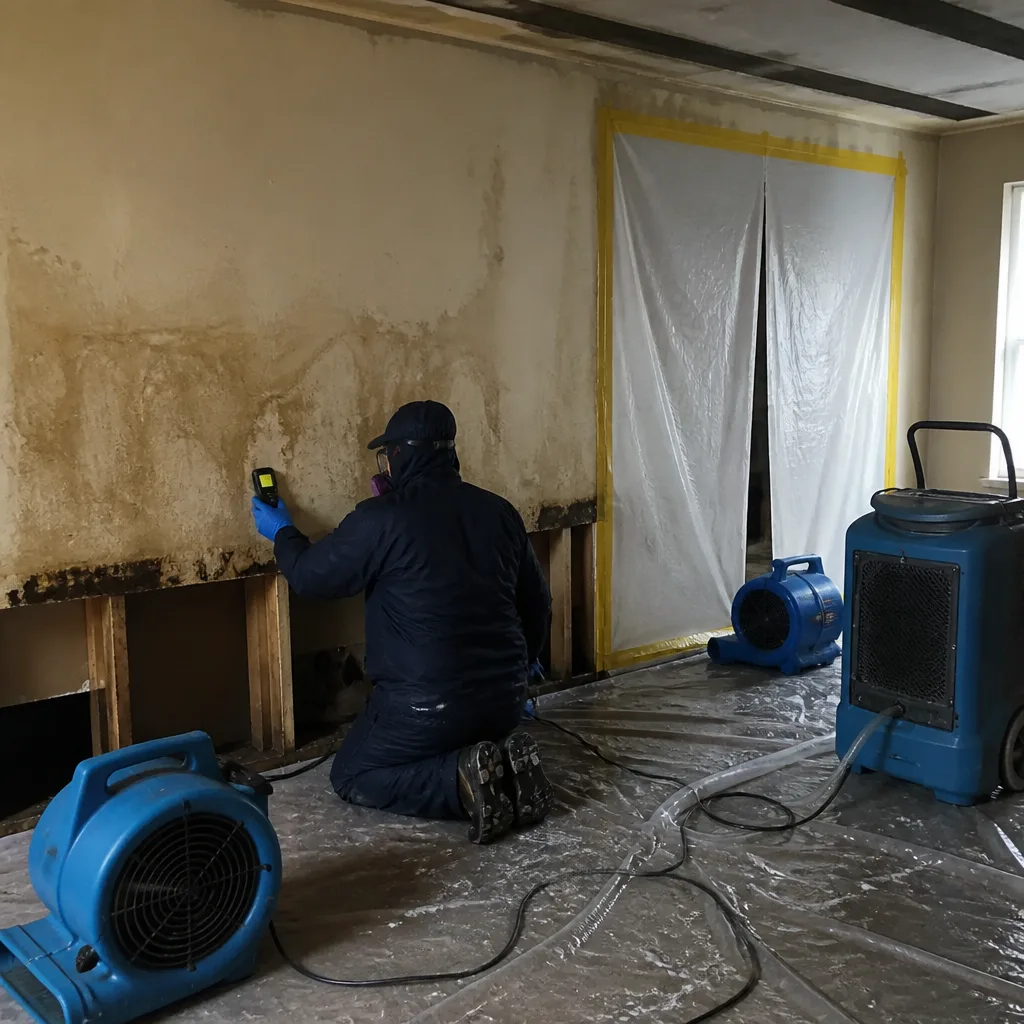 Before
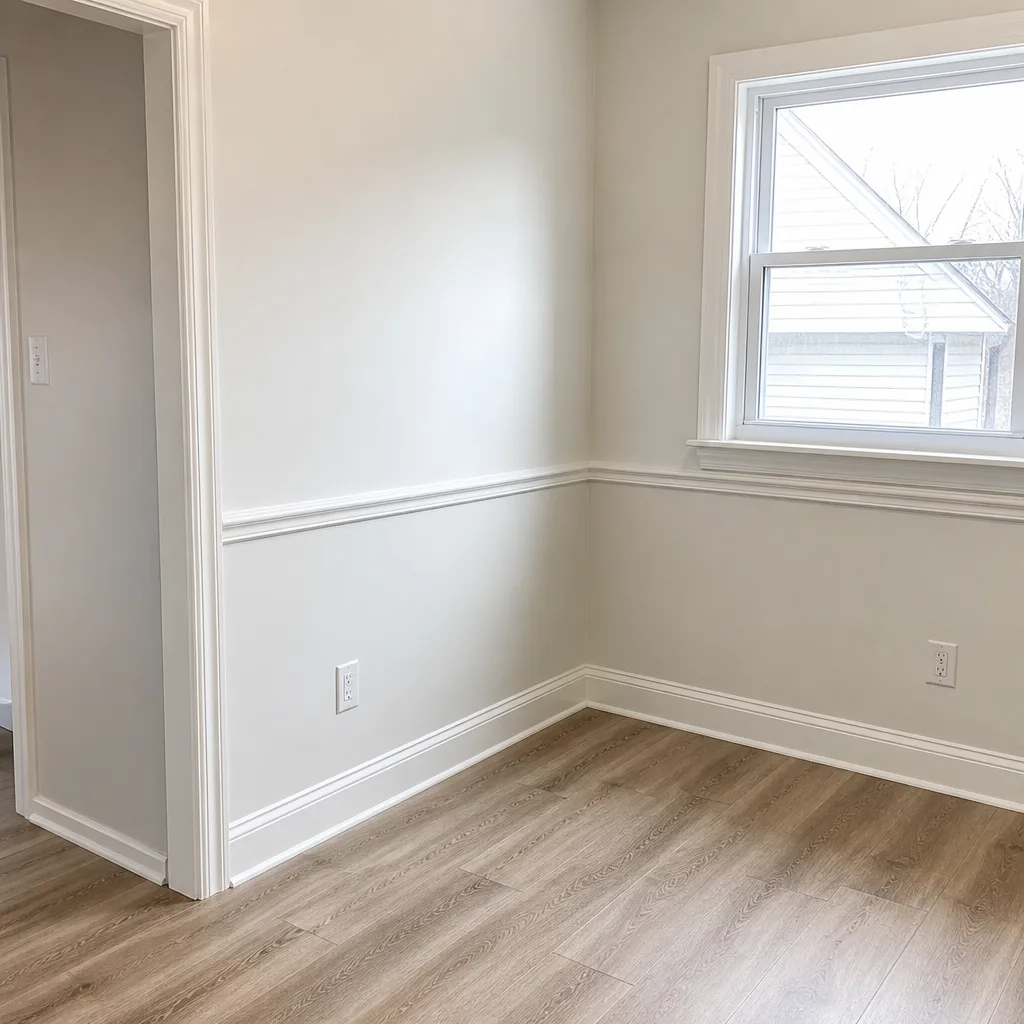 After
After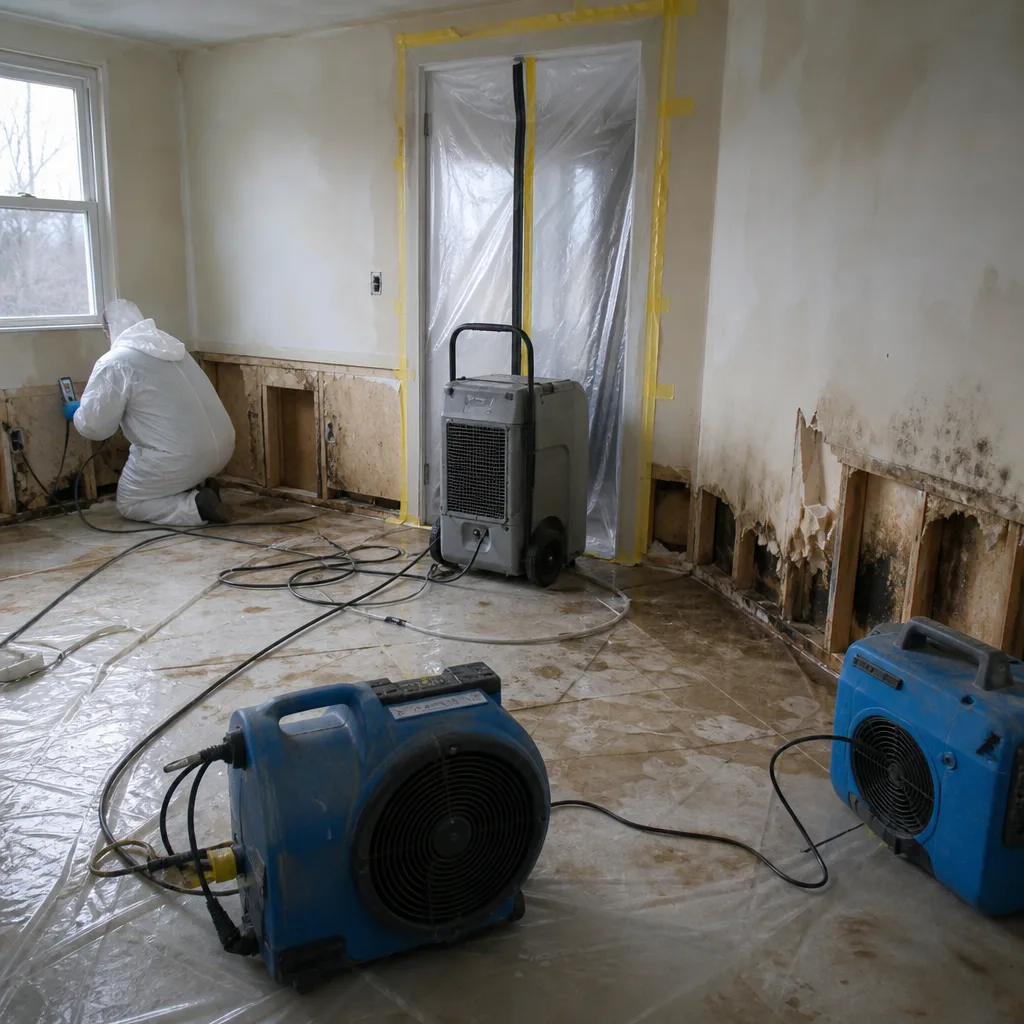 Before
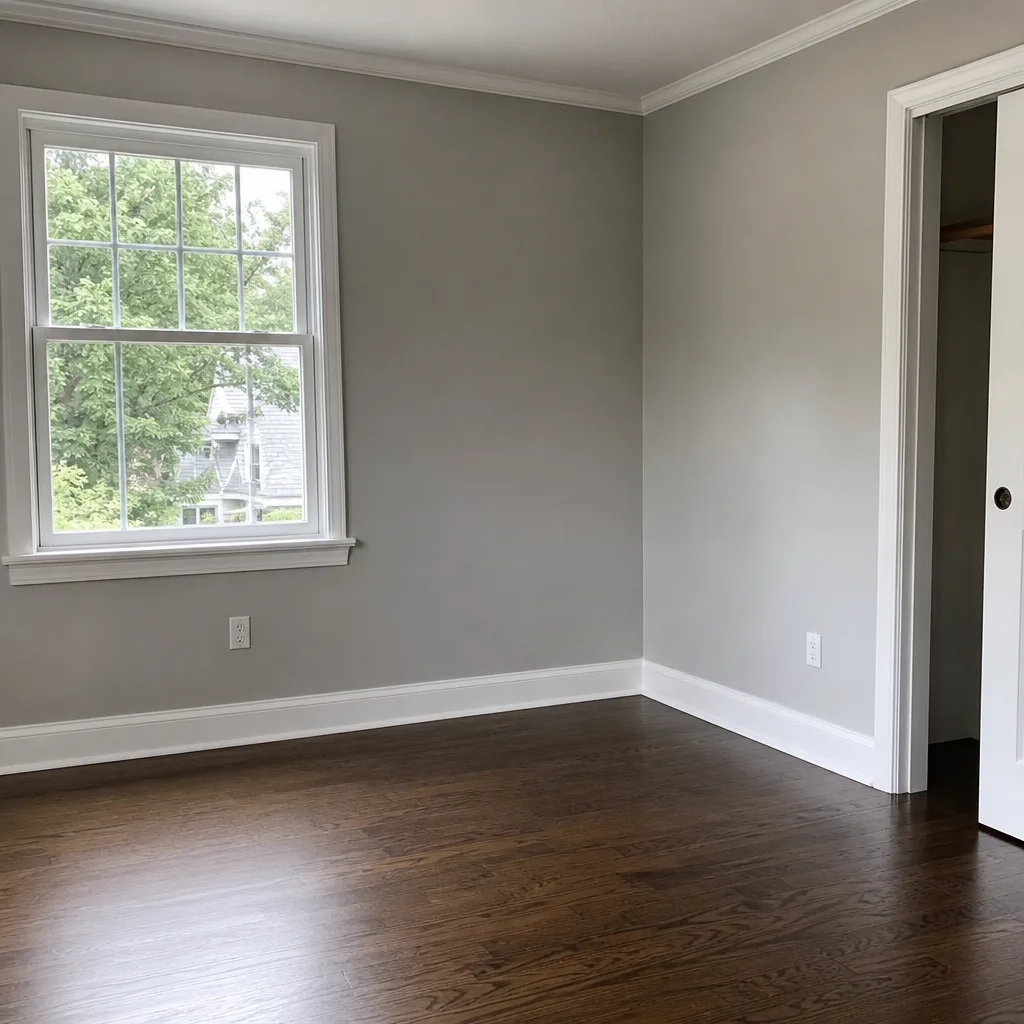 After
After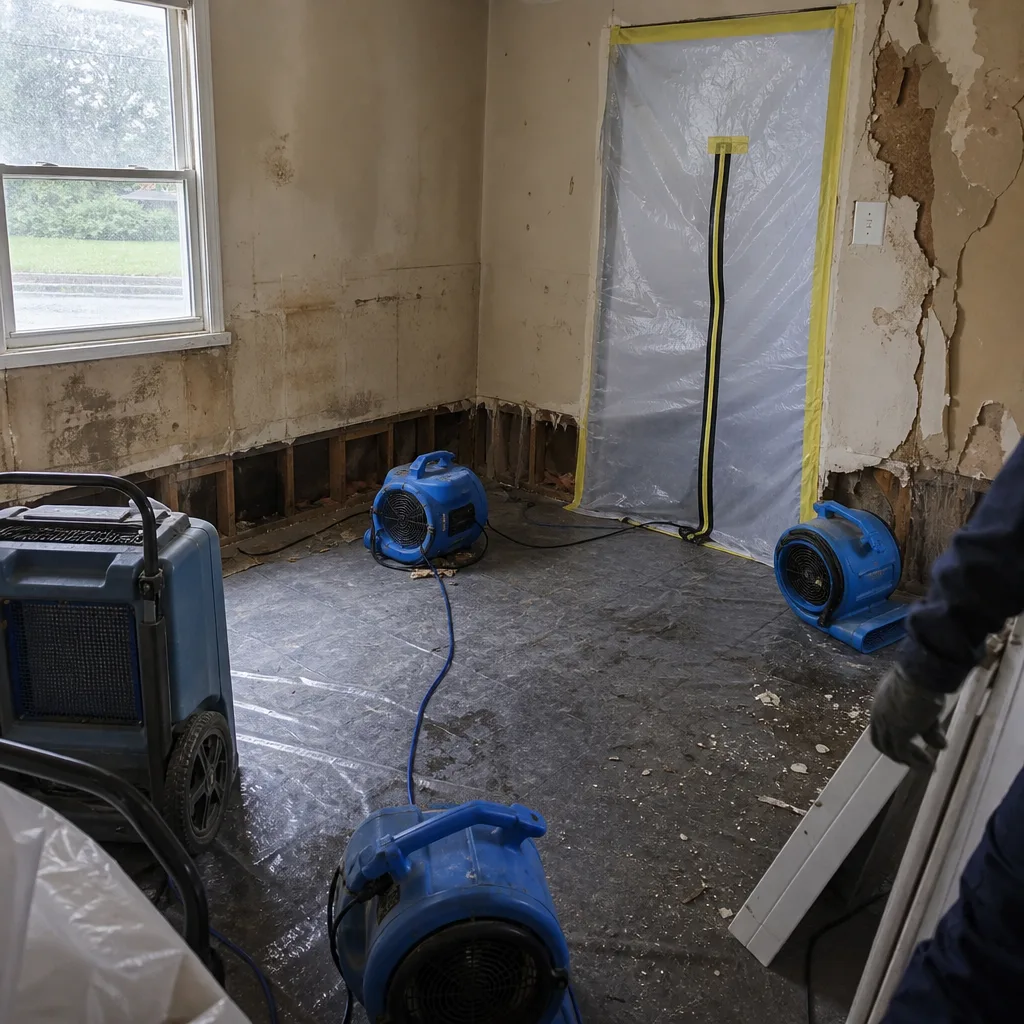 Before
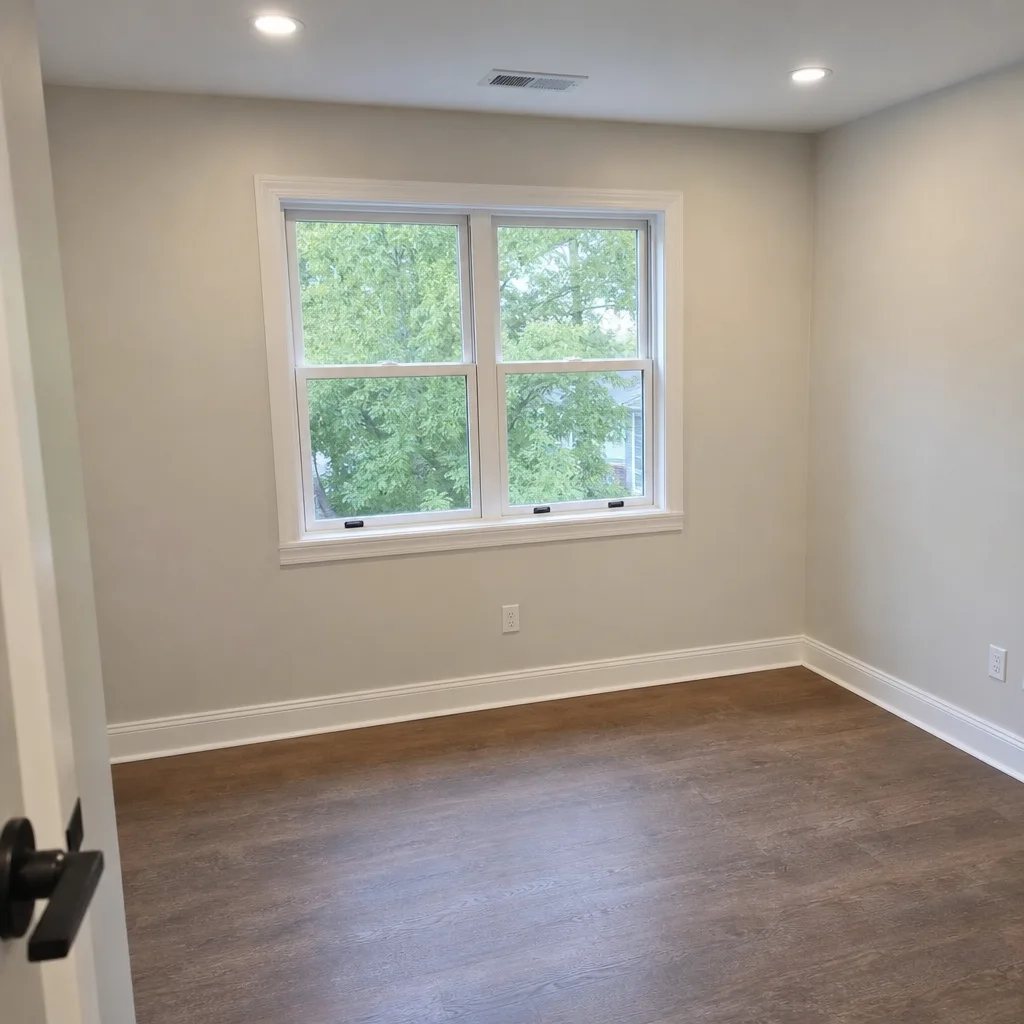 After
After24/7 Emergency Storm & Disaster Restoration in Haworth
Storm and flood damage in Haworth moves fast, and so do we. When the Pascack Brook jumps its banks or a nor’easter tears through the borough, call (551) 348-3742 and a live dispatcher answers, day or night. Our crews stage in and around Bergen County, so we typically reach Haworth homes within 45 minutes of your call, ready to extract water, tarp a damaged roof, or board up a broken window the same visit. The first hour matters because water from creek flooding is contaminated and keeps migrating into drywall, insulation, and framing the longer it sits. Our Storm & Disaster Restoration team arrives with professional-grade extraction equipment, not a wet vac from the hardware store. A free visual inspection tells us what you’re dealing with before any work begins.
Understanding Storm & Disaster Restoration Severity in Haworth Properties
Not all storm water is the same, and in Haworth the difference matters more than most towns because of the Pascack Brook. Floodwater that enters a finished basement off Lake Shore Drive or Valley Road after the creek overflows is Category 3 water, meaning it carries silt, bacteria, and whatever else the brook picked up on its way downhill. That requires full containment, antimicrobial treatment, and disposal of saturated porous materials. Category 1 water, by contrast, might come from a burst supply line during a January freeze, but even that degrades to Category 2 within 48 hours if not extracted. Haworth’s housing stock, dominated by Colonials and split-levels built between the 1940s and 1970s, complicates this further. Plaster-and-lath walls absorb water differently than modern drywall and can hide moisture migration behind finished surfaces for weeks. Moisture mapping with thermal imaging and hygrometers is non-negotiable here because original 1960s paneling in a creek-side basement can conceal a dormant mold colony that reactivates after every flood event. Severity assessment in Haworth is as much about what’s behind the wall as what’s on the floor.
Why Haworth Property Owners Choose Floodline Restoration Co.
- 45-minute response commitment: Our crews stage near Bergen County and typically reach Haworth homes in under an hour, so extraction starts the same visit, not tomorrow.
- 24/7 live answer, always a person: When the basement is filling at 2 a.m., you get a dispatcher on the line, not a recording and not a callback promise.
- IICRC-certified crews: Our technicians carry WRT (Water Damage Restoration), FSRT (Fire & Smoke Restoration), and AMRT (Applied Microbial Remediation) certifications, and we handle every phase of the job with that same certified crew.
- Free visual inspection: Before any work begins, we walk the loss with you, document what we see, and explain the scope in plain English so you know exactly what you’re approving.
- Direct insurance billing: We deal with your adjuster, send the documentation, and bill the carrier directly where coverage applies. You never play messenger between us and your insurer.
- One team from extraction to rebuild: The same Floodline crew that pulls the water on day one handles drying, sanitation, and reconstruction. No mid-job handoff to a sub you never vetted.
Our Storm & Disaster Restoration Process
Inspection & Assessment
We start with a room-by-room walkthrough, document the visible damage with photos, and use moisture meters and thermal imaging to map what you can’t see. In Haworth’s older homes, this includes checking for asbestos-containing materials in floor tiles or pipe insulation before any demolition happens.
Extraction & Stabilization
For flood events, we deploy truck-mounted and portable extraction units to remove standing water quickly. For wind or tree damage, stabilization means emergency board-up and roof tarping to keep more water out while we assess the full scope.
Drying & Dehumidification
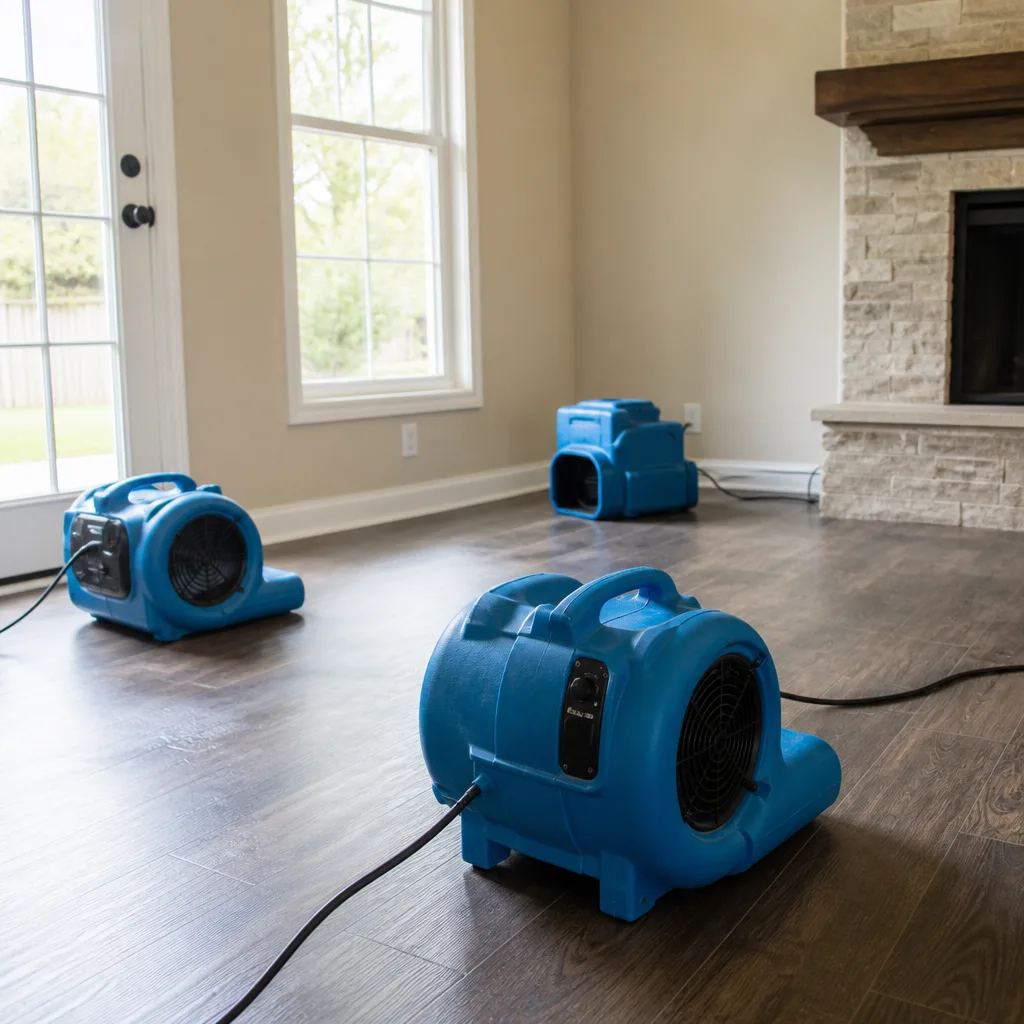
We place Dri-Eaz and Phoenix air movers and dehumidifiers according to a drying plan tailored to your home’s layout. Daily moisture readings are logged until we reach the dry standard, and that log goes to you and your insurer.
Cleaning & Sanitization
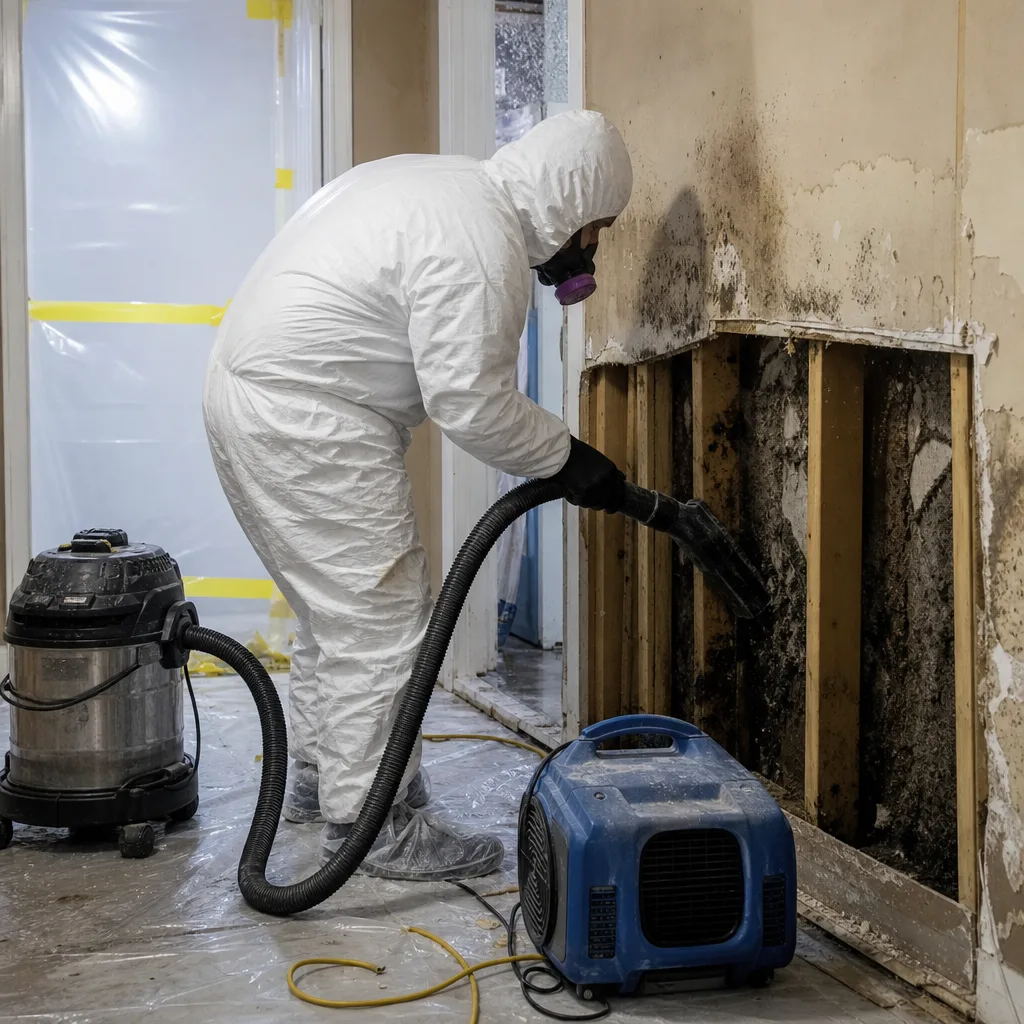
Category 3 floodwater from the Pascack Brook requires antimicrobial treatment on every affected surface. HEPA air scrubbers run during this phase to capture airborne spores, especially in finished basements where old paneling may have harbored dormant mold.
Specialty Treatment for Haworth’s Older Homes
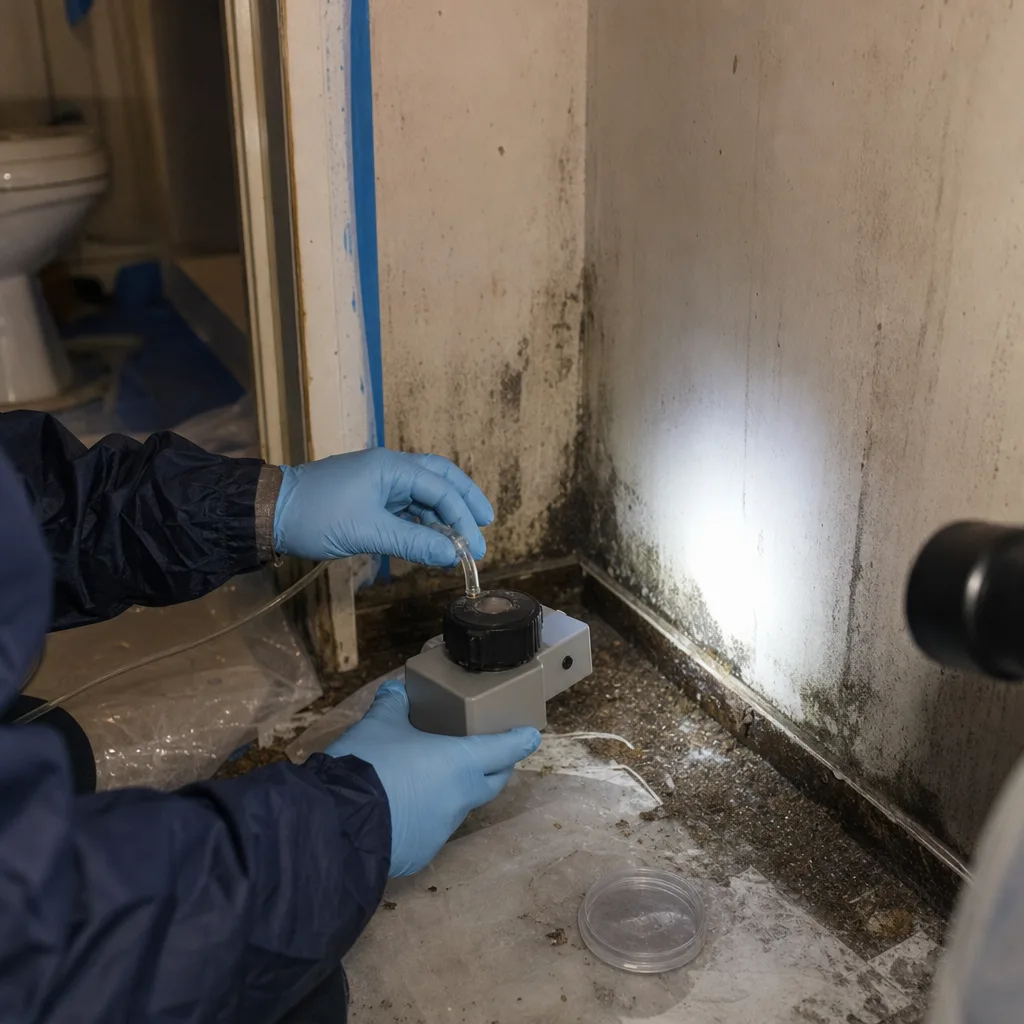
This is where we address what’s behind the walls: reactivated mold colonies behind 1960s paneling, saturated plaster that needs controlled drying, and cast-iron plumbing stressed by freeze-thaw cycles. We test and handle asbestos-containing materials before disturbing them.
Repairs & Restoration
The same crew that did the extraction rebuilds what needed removing. Since Floodline handles reconstruction in-house, you’re not waiting for a second company to show up after the drying is done. We stand behind it with the 90-Day Done Right Promise, in writing.
Need Emergency Storm & Disaster Restoration in Haworth Now?
Crews minutes away, answering live 24 hours a day. The sooner we start, the less it costs.
Working With Your Insurance Company
Most Haworth homeowners have never filed a storm damage claim before the night the basement floods. We handle the documentation from the first hour so your claim is built on evidence, not estimates pulled from thin air. Our techs photograph every affected room before and after extraction, log daily moisture readings, and generate a line-item scope of work in the format carriers expect from a certified restoration company. When your adjuster arrives, we walk the loss together and explain what we found, including pre-existing conditions common in 1940s-1970s Haworth homes, so there are no surprises on the settlement. We bill the carrier directly where coverage applies, and you get copies of everything we send them.
What We Provide Your Insurer
- Thorough documentation of the loss
- Photos of all damage, room by room
- Moisture readings and drying logs
- A detailed, line-item scope of work
- Direct coordination with your carrier
Built for Haworth’s Loss Calendar
In Haworth, the storm damage calendar follows a predictable rhythm, and being ready for it is part of living here. January and February bring deep freezes that stress the older foundation walls in this borough’s Colonials and split-levels. Water finds its way into any crack that freeze-thaw cycles have widened over decades, and a finished basement becomes an insurance claim before the thaw even arrives. March and April are the snowmelt and spring rain window, when Pascack Brook rises and creek-side homes along Lake Shore Drive and the lower-lying streets near the borough line start seeing water where they’ve seen it before. Summer thunderstorms can drop two inches of rain in an hour, overwhelming French drains installed when these homes were built, systems never designed for today’s rainfall intensity. Autumn brings the remnants of tropical systems and the first nor’easters of the season. The pattern is consistent: Haworth’s valley topography concentrates runoff from surrounding ridgelines, and the creek delivers it to the same basements year after year. We plan our Haworth response capacity around these windows because the borough’s loss calendar is not a mystery to anyone who’s worked here for long.
Storm & Disaster Restoration Across Haworth’s Neighborhoods
Haworth’s geography splits the borough into distinct risk zones, and our crews know them by name. The streets running toward Pascack Brook, including the homes off Lake Shore Drive and the lower sections of Valley Road, see the bulk of creek-driven basement flooding. These are the properties where a finished basement is as much a liability as an asset, and where we regularly find that “new” water damage is actually an older event that was never properly dried. The northern residential blocks between Sunset Avenue and the Demarest border sit higher and deal less with flooding and more with wind damage: mature trees, steep roofs, and older garages that take the brunt of a nor’easter’s gusts. Along Haworth Avenue and the central cross streets, the split-levels common to the borough’s 1950s and 1960s building boom present a different challenge: multiple finished levels mean water travels down through the structure, and what starts as a roof leak ends as a ceiling collapse over a finished rec room. Homes near Kenoza Avenue in the western section sit on the borough’s higher ground but still face the foundation crack issue that comes with freeze-thaw stress on mid-century concrete. Every neighborhood in Haworth has a loss pattern. Our dispatch board is built around them.
Specialized Storm & Disaster Restoration Services We Offer in Haworth
Flood Damage Restoration
This is the service that defines storm response in Haworth. When the Pascack Brook overflows, water enters basements as Category 3 contamination, and proper restoration means extraction, containment, antimicrobial treatment, and controlled drying, not just pumping water out and running a box fan. We treat creek floods as the biohazard events they are and document everything for your carrier.
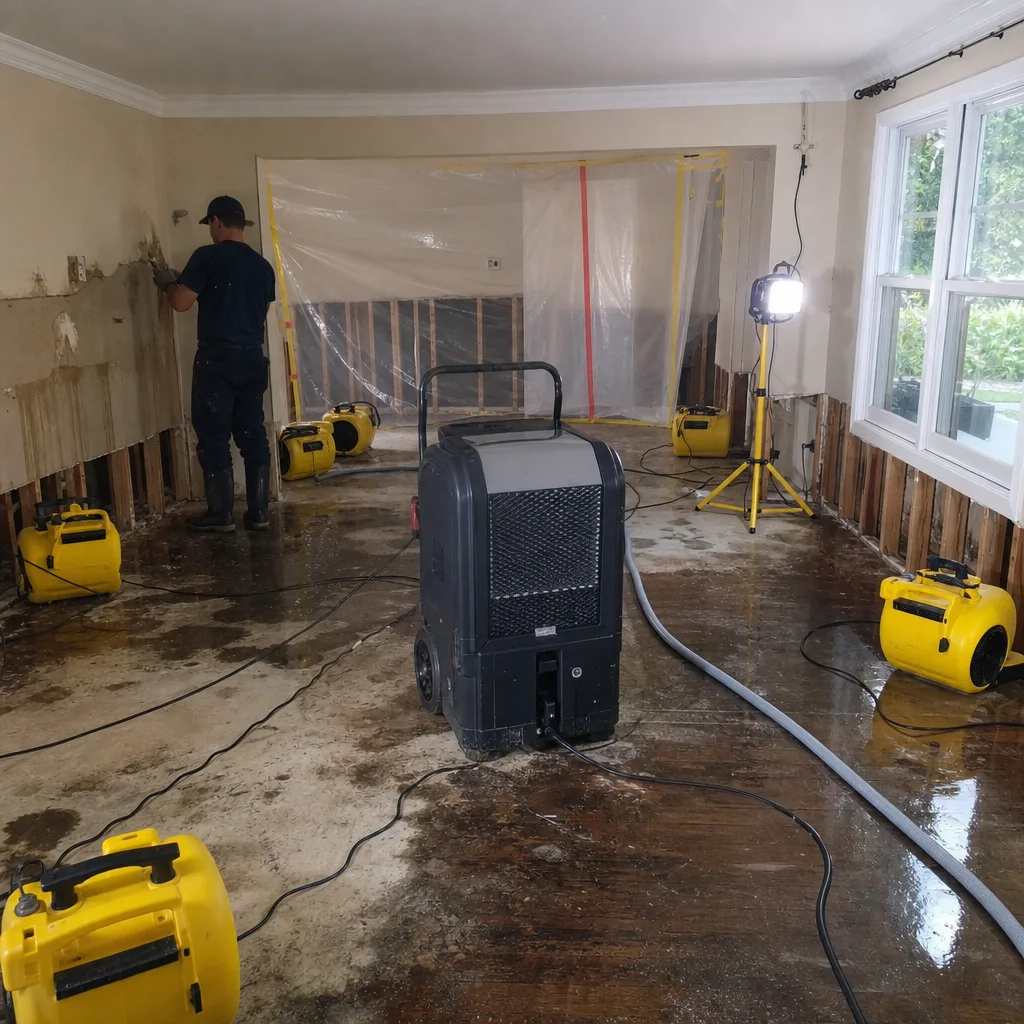
Storm Damage Cleanup
After wind takes down a branch or a basement takes on six inches of creek water, the first cleanup pass matters. We remove debris, extract water, and clear the space to a point where drying can actually begin. For Haworth’s older homes, this includes identifying materials that need testing before removal, so we don’t turn a water loss into an asbestos exposure.
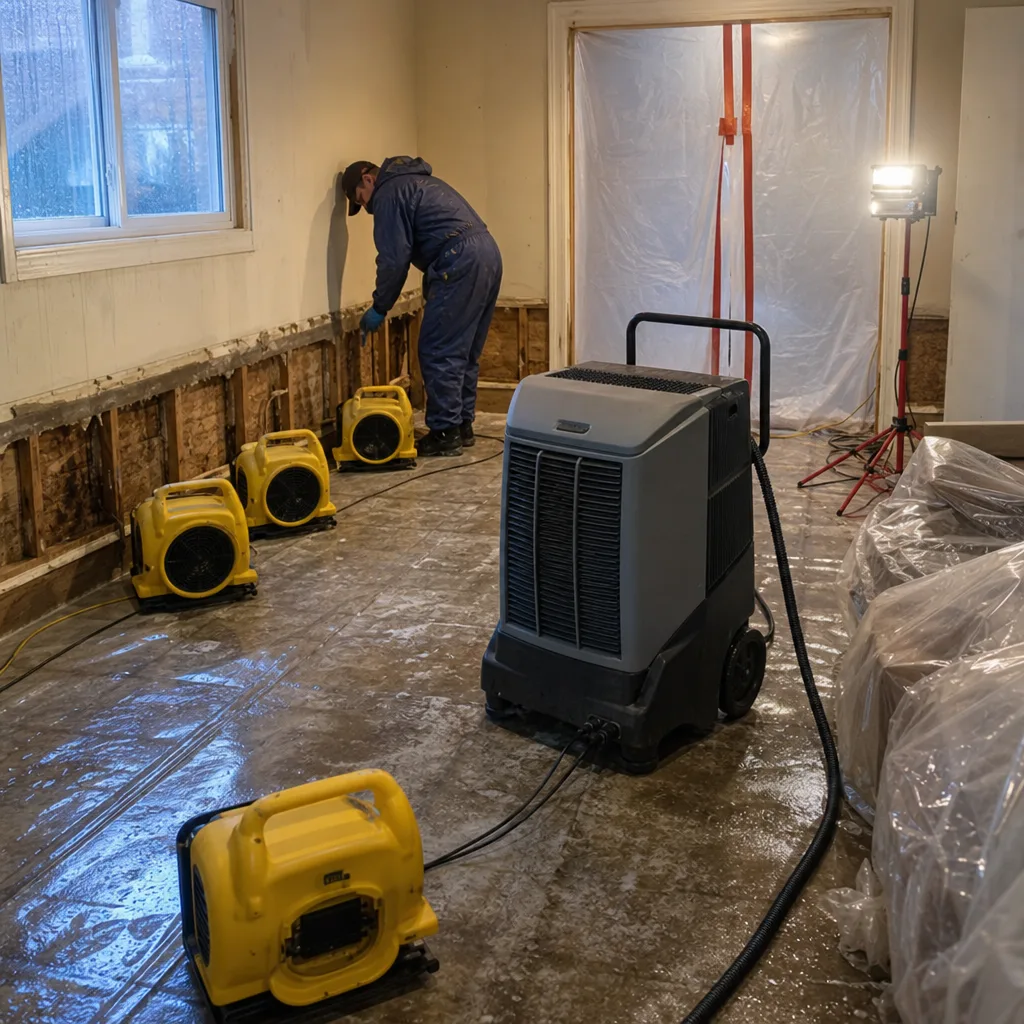
Emergency Board-Up
A broken window or storm-door breach on a Haworth winter night lets in more than cold air; it invites water and gives anyone access to an unoccupied home. Our board-up crews secure openings with plywood and fasteners the same visit, then document the stabilization for your insurer as part of the loss.
Roof Tarping
A nor’easter can strip shingles from a 60-year-old roof in minutes. We tarp affected sections with reinforced material and secure it against the next gust, buying time for a proper repair without letting more water into the attic. Haworth’s older roof assemblies, often with original plank decking, need a careful tarp job that doesn’t cause further damage.
Debris Removal
Downed limbs, broken fencing, and storm-tossed building materials block access and slow recovery. We clear the path, haul the debris, and photograph what we remove so the work is on the record. Where debris has damaged structures, we document that too before any cleaning begins.
What happens when you call
- 1
A real person answersNo phone trees - you reach a local pro.
- 2
You get an upfront price rangeHonest numbers before anyone is dispatched.
- 3
A background-checked tech heads outLicensed & insured, dispatched right away.
- 4
You approve before work beginsNothing starts until you say go.
Storm & Disaster Restoration Costs in Haworth, NJ
Storm restoration in Haworth is priced by the scope, not by a flat fee, and the range depends on how far the water traveled and what it touched. A straightforward stormwater cleanup where water stays in an unfinished basement typically runs $1,800 to $3,500 in Haworth. A creek-driven Category 3 flood in a finished basement with paneling removal, antimicrobial treatment, and full structural drying commonly lands between $4,000 and $9,000, depending on square footage and how much material requires demolition. Roof tarping after wind damage runs $350 to $800 for a typical tarp job on a Haworth Colonial. Emergency board-up for a broken window or door is usually $250 to $600. The variables that move the price: whether asbestos testing is required before demolition, how long water sat before extraction, and whether mold remediation is needed behind old paneling. Most storm damage is a covered peril under standard homeowners policies, and we bill your carrier directly where coverage applies. The free visual inspection is how we turn these ranges into a written scope for your exact loss. Call (551) 348-3742 and we’ll come look.
We Also Serve Cities Near Haworth
Our crews cover the surrounding Bergen County boroughs, including Dumont, Demarest, Closter, and Cresskill. If you’re in one of those towns and dealing with storm damage, the same certified team, the same 45-minute response commitment, and the same 90-Day Done Right Promise apply. For a closer look at our local work, see our Haworth page.
Serving Haworth, NJ - Our Local Coverage Area
We’re based in the Haworth area and know this community well. Use the map below to see our service coverage - if you’re nearby, we can almost certainly help.
Haworth Storm & Disaster Restoration Questions, Answered
How does Haworth’s creek-side flooding affect the category classification of water in my finished basement?
Creek water from the Pascack Brook is Category 3 water, no exceptions. It carries silt, bacteria, fertilizer runoff, and whatever else the brook collected on its way through the valley. That means every affected surface needs antimicrobial treatment and saturated porous materials like carpet, pad, and drywall must be removed, not dried. Treating a creek flood as clean water leaves contamination behind that causes ongoing odor and health issues for months. Call (551) 348-3742 and we’ll classify it correctly from the first visit.
Why do some Haworth homes get water in the basement every spring even when the creek doesn’t overflow?
The culprit is usually Haworth’s freeze-thaw cycle working on older foundation walls. Winter water seeps into hairline cracks, freezes, expands, and widens the gap. By spring, those cracks are large enough to let groundwater in whenever the water table rises from snowmelt and rain runoff, even if the Pascack Brook stays in its banks. Many of these homes also have original French drains from the 1960s that were never sized for today’s rainfall intensity and may be partially clogged with decades of silt. We can trace the source and fix the drainage issue, not just extract the water every spring.
Should I test for asbestos before starting flood restoration in an older Haworth home?
Yes, if your home was built or renovated before 1980 and the restoration will disturb floor tiles, pipe insulation, or other suspect materials. Haworth’s 1940s through 1970s housing stock frequently contains asbestos in 9×9 vinyl tiles, sheet flooring, and pipe wrap. Removing saturated materials from a flooded basement without testing first can release fibers into the air, which is a serious health issue and a liability for any restoration company that skips the step. We handle testing and abatement coordination before demolition starts, and we document it all for your insurer.
How do you dry a 1960s finished basement with paneling after a flood without tearing out all the walls?
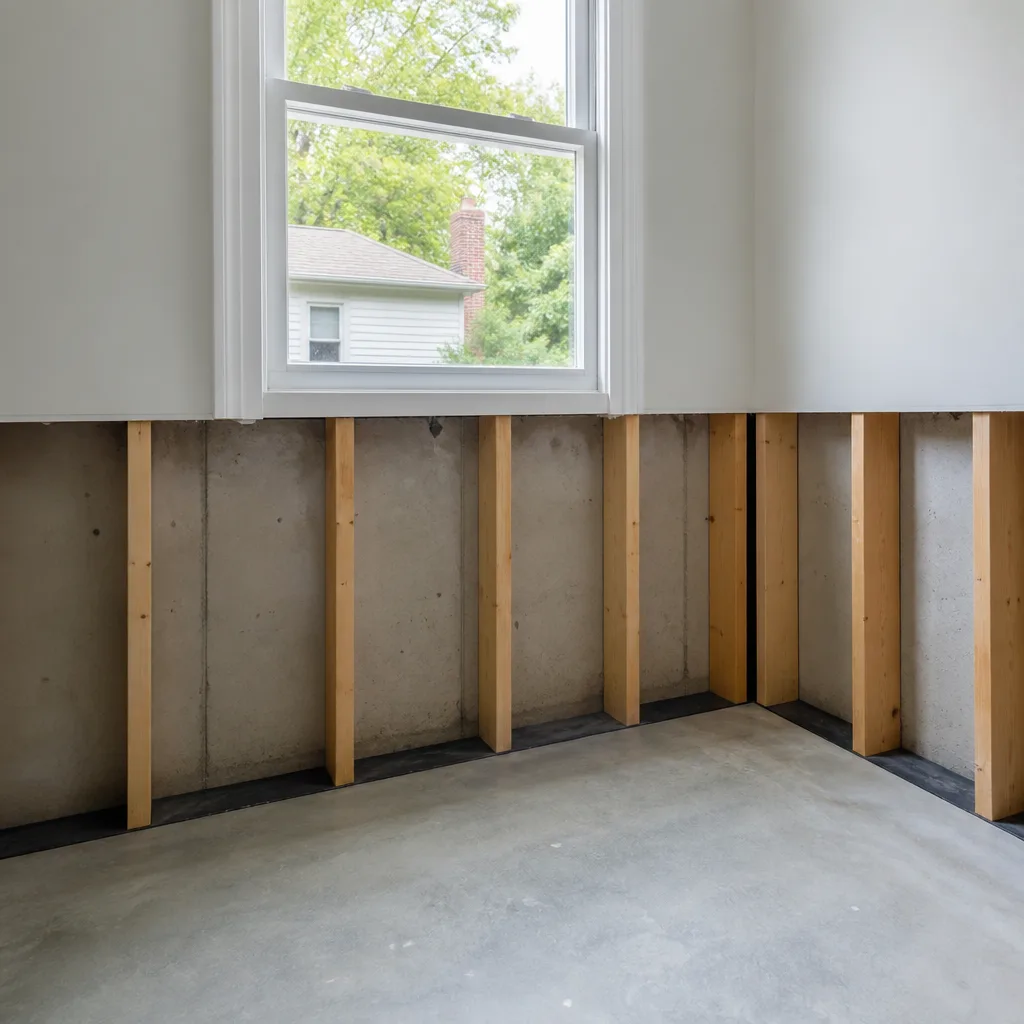
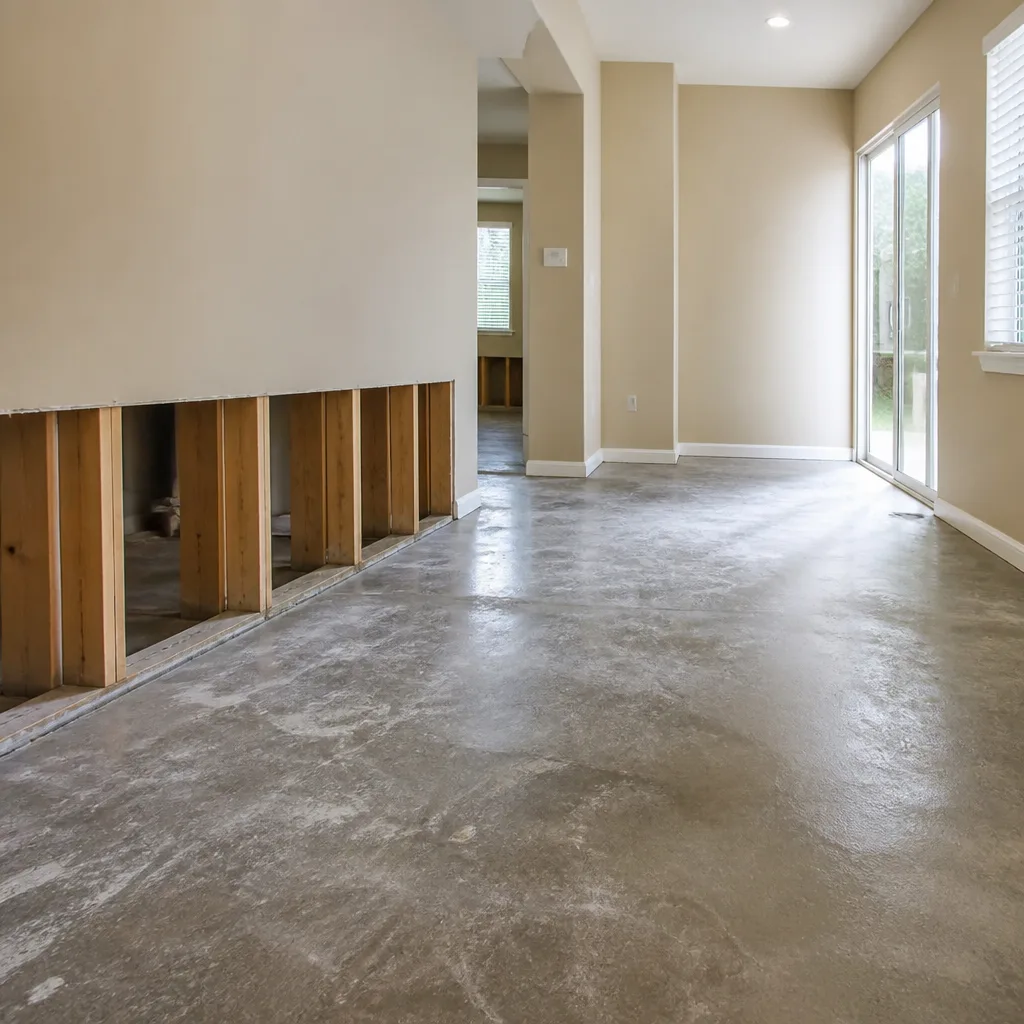
It depends on what the moisture mapping shows. Our techs use thermal imaging and moisture meters to see where water migrated behind the paneling. If the paneling itself is still structurally sound and the cavity can be dried, we drill small access holes, run air movers to create airflow behind the wall, and place dehumidifiers to pull moisture out. We take daily readings until the dry standard is met and log every number. But if the paneling is saturated, warped, or hiding reactivated mold, it comes out. Panel can’t be saved once it’s absorbed creek water, and keeping it would guarantee a mold problem behind the wall within months. We’ll show you the readings and explain the decision either way.
What is a ‘drying log’ and why do Haworth restoration companies keep one?
A drying log is a dated record of moisture readings taken in every affected area, every day, until the structure reaches the dry standard. It shows your insurer that the drying actually happened, it documents progress if the claim is reviewed later, and it protects you if a future issue arises. We keep one on every water job and hand a copy to you and your adjuster. In Haworth, where old houses and creek flooding combine, the drying log is also how we prove the basement wasn’t just pumped out and refinished; it was actually dried. That matters when you sell the house and the next owner asks about prior water damage.
How fast can someone actually get to my Haworth home after a storm?
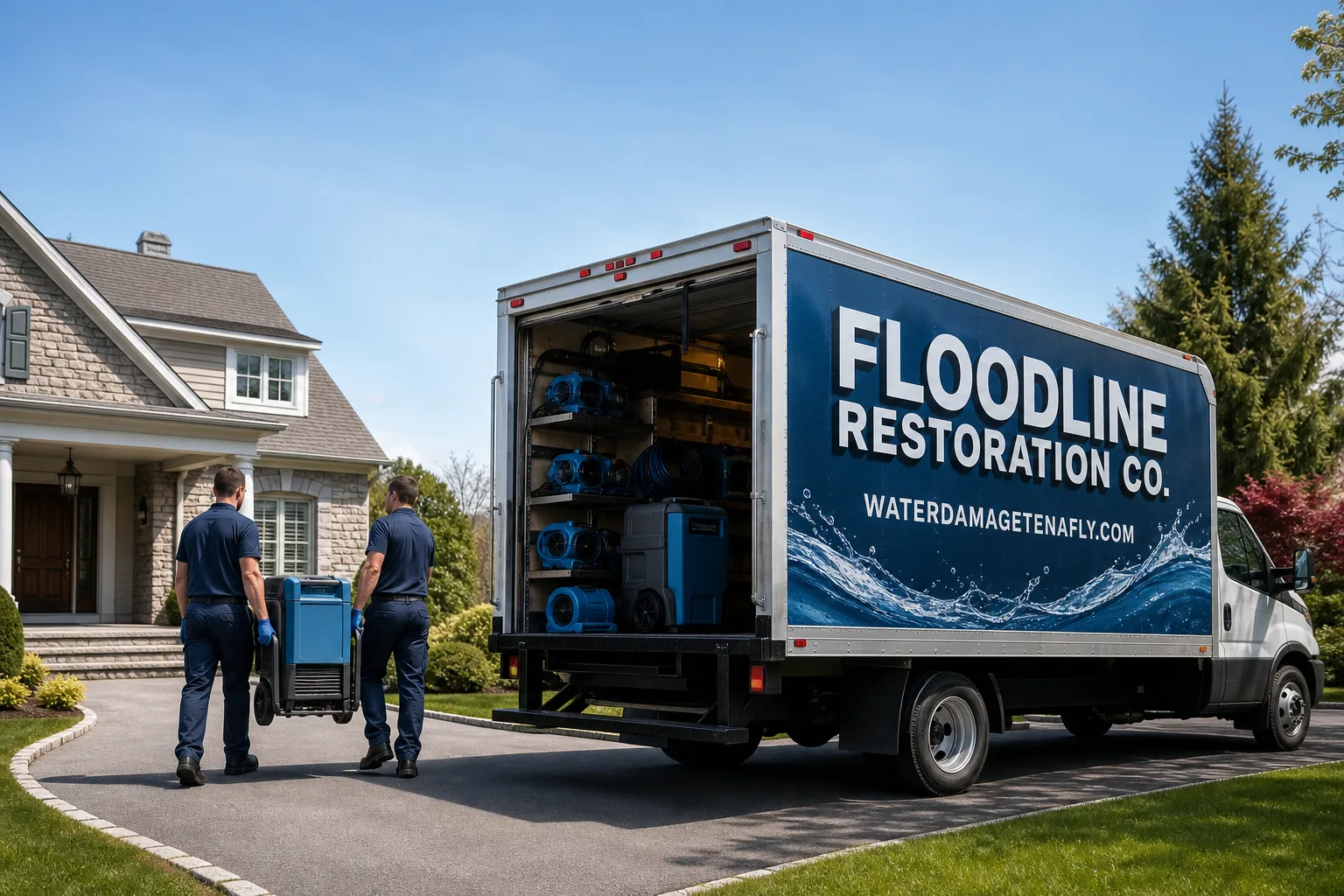
We commit to a 45-minute response commitment for Haworth, and our dispatch board is set up so a live person answers your call at any hour. The crew that arrives carries extraction equipment, moisture meters, and material for board-up and tarping on the truck, so the first visit accomplishes something real. Call (551) 348-3742 now; the sooner extraction starts, the less damage we’re dealing with and the lower your final cost.
Will my insurance cover storm and flood restoration in Haworth?
Storm damage from wind, falling trees, and water that enters through a storm-created opening is typically covered under standard homeowners policies. Creek flooding from the Pascack Brook overflowing its banks is technically surface water flooding, which standard policies often exclude unless you carry a separate flood policy. This is a critical distinction in Haworth, and we work with your adjuster to document the cause of loss accurately so the claim is handled according to what actually happened. We bill your carrier directly where coverage applies, and you get a clear picture of covered versus out-of-pocket costs before work begins.
Can I stay in my Haworth home during storm restoration?
For most storm damage, yes, with some cautions. If we’re running HEPA air scrubbers and HEPA vacuums for mold remediation, or if Category 3 floodwater touched the HVAC system, you may need to stay out of the affected area, and in some cases out of the house, until containment is removed and air clearance testing passes. For a typical flooded basement, the rest of the house is usually habitable while we work below, though you’ll hear the equipment running. We’ll give you a straight answer at the inspection based on what we find, not a blanket yes.
Need storm or disaster restoration in Haworth right now? Call (551) 348-3742. A live person answers, a certified crew arrives fast, and the work is backed in writing with the 90-Day Done Right Promise. Free visual inspection, direct insurance billing, and no surprises on the bill.
Written by Curt Bowman, Owner at Floodline Restoration Co., serving Haworth and surrounding Bergen County communities.