
Emergency Water Damage Restoration Near Me: What Tenafly Homeowners Should Do First
If you’ve just found water where it shouldn’t be, the single most important thing in the first hour is to stop more water from coming in, then document everything before you move a single wet item. The order matters more than most people realize. If you’d rather skip the details and have someone on the way now, call (551) 348-3742 – a live dispatcher answers at any hour, and that first call is free.
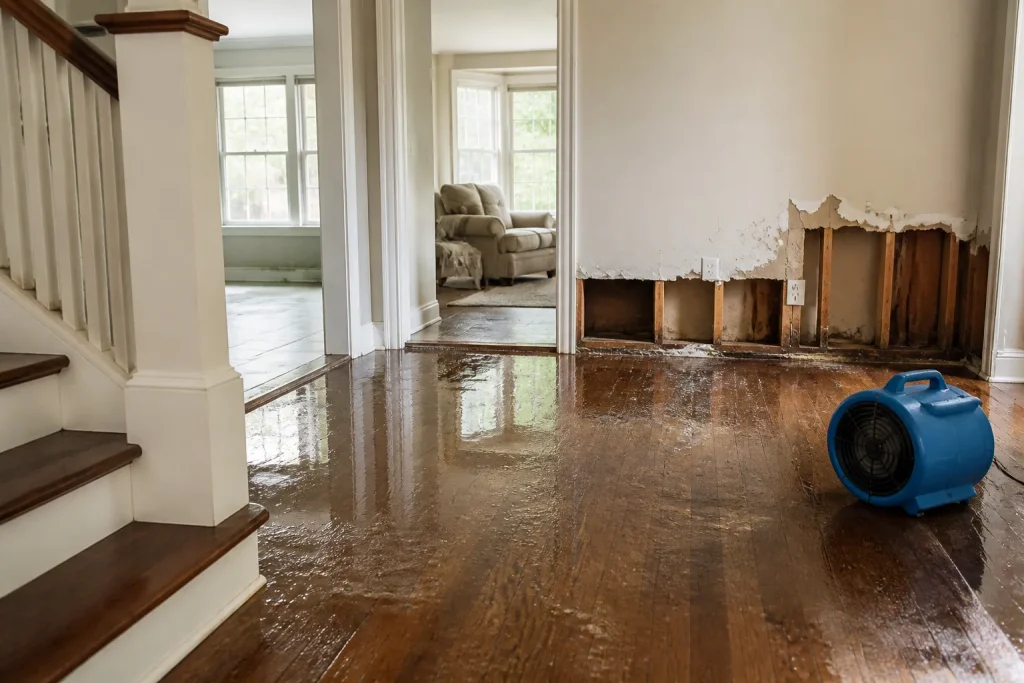
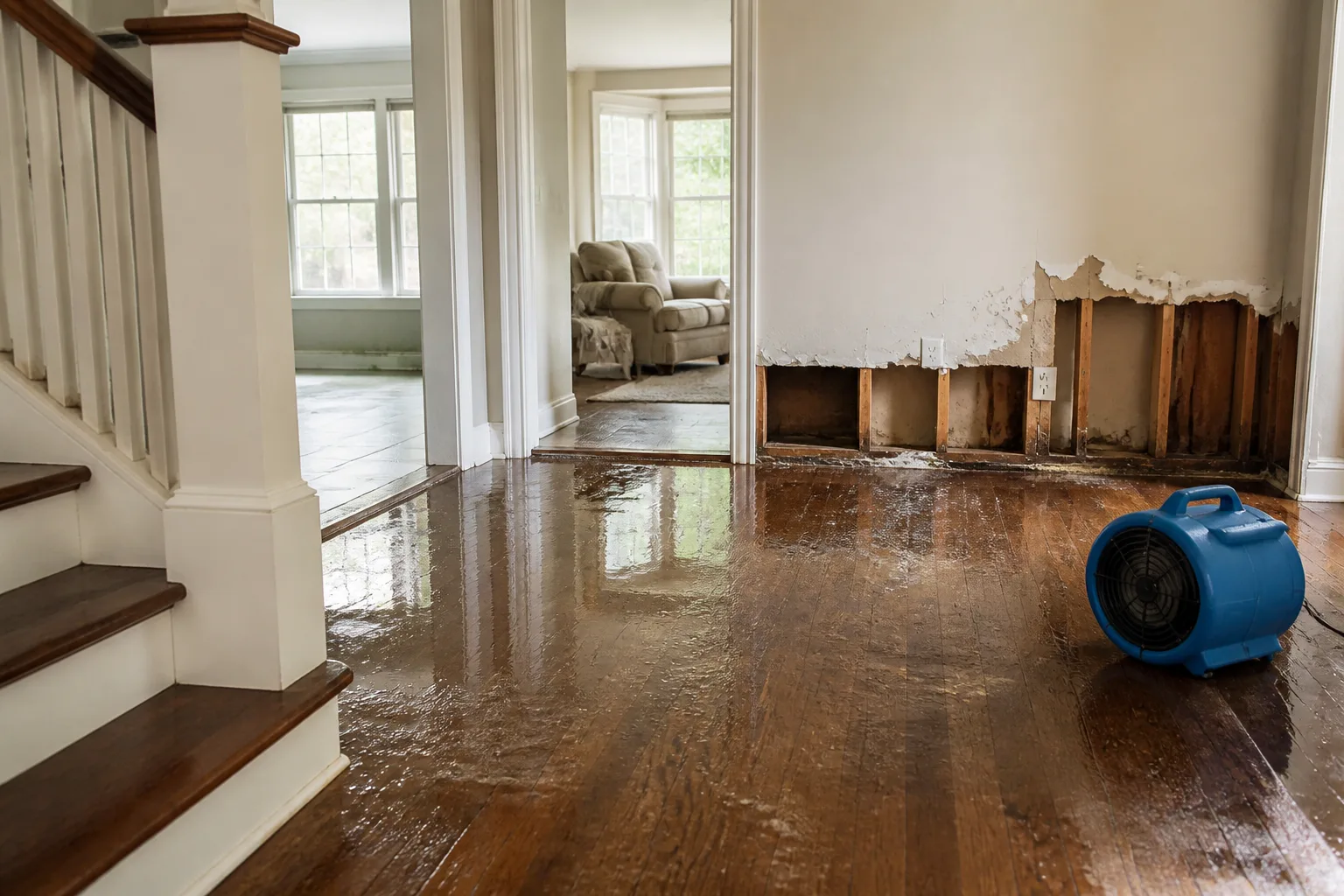
Running a shop vac over a flooded basement floor feels productive. It’s not. If you do it before photographing the water line on the drywall and baseboards, you’ve just erased the most important evidence your adjuster needs to authorize full remediation, not just surface cleanup. In Tenafly, where older split-levels and colonials sit on graded lots that pitch toward the Hackensack River watershed, the damage pattern tells the adjuster exactly what happened. Your first job is to preserve that pattern.
The First-Hour Sequence That Protects Both Your Home and Your Claim
Most homeowners do the right things in the wrong order. Here is the sequence that protects your structure and your insurance claim simultaneously. This is not theory. We’ve worked claims in Tenafly where a skipped step cost the homeowner thousands in out-of-pocket secondary repairs.
- Stop the source if you can identify it safely. If it’s a burst supply line, a failed water heater, or an appliance leak, find the shut-off and close it. If it’s storm water rising from the floor, there’s no valve to turn, and step 2 becomes the priority. Never step into standing water if you can’t see the floor below it, and never touch a wet electrical panel. Kill power at the main breaker if the panel is dry and accessible.
- Photograph and video everything before moving anything. Stand at the doorway and shoot the whole room. Get close-ups of the water line on walls, the way carpet padding is saturated under the baseboard, any warping at the bottom of door casings. Shoot a slow video walking the full perimeter. These images are what your adjuster uses to distinguish a Category 1 clean-water event from a Category 3 contamination event, and that distinction changes the entire scope of coverage.
- Move furniture and contents to dry ground, but only after you photograph them where they sit. Furniture legs standing in water wick moisture up into the piece. The longer they sit, the more vapor releases into the room and the more secondary damage you’re responsible for proving later. Lift chairs, lamps, rugs, anything that can be moved, and place them on a dry upper floor or outside under cover. Do not dry-clean or launder anything yet; the adjuster may need to see it.
- Call your insurance carrier, but keep the call short and factual. Say you have water damage, give the date, time, and source if known. Do not guess at a cause you’re not certain of. Do not say “it’s probably ruined” or “it’s not that bad.” Both statements get logged and both can be used later to shrink the claim. One Tenafly homeowner told her carrier “the basement took on about an inch,” and she was right about the inch – but the water had wicked up the drywall eight inches higher. The adjuster’s initial scope matched the “about an inch” phrase, and it took sixty days and a resubmission to correct it.
- Call a restoration company with live 24/7 dispatch. At two in the morning, a recorded message that says “your call is important to us” is a delay. A live person who can tell you a crew is already rolling is a different animal. More on what to ask them below.
There’s a reason the order is: shut off, document, move, call carrier, call restoration. The documentation step is where homeowners lose the most money. Extraction is fast and mechanically simple. Re-proving the scope of damage after you’ve erased it is slow, contested, and often incomplete. If you’re in the first hour of a Tenafly basement flood and you take nothing else from this article, take the photographs first.
What Actually Floods First in Tenafly Homes
Tenafly’s flood risk is not evenly distributed. Homes east of Knickerbocker Road, particularly the streets sloping toward the river, deal with storm surges and sump pump failures after heavy rain. Homes on the higher ground west of town still get basement seepage, but the cause is more often hydrostatic pressure against the foundation wall than surface water pushing in. And everywhere in between, the most common call we answer is a frozen or failed supply line – the copper or PEX line behind a washer, under a kitchen sink, or running through an unheated garage wall.
Each of these sources creates a different damage profile. Storm water from the Hackensack watershed carries silt, organics, and whatever the street picked up before it came through your bilco door. That’s Category 3 water – contaminated – and it means baseboards, drywall, and sometimes flooring come out, not just dry. A burst supply line in a second-floor bathroom is Category 1 clean water until it soaks through a floor cavity and picks up whatever’s been living in that cavity since the house was built. Knowing which category you’re looking at changes what you do in the first hour. If it’s storm water, you’re not doing any DIY extraction. You’re photographing, containing, and waiting for a crew with proper extraction equipment.
One thing every Tenafly homeowner should know: the water you see on the floor is the minority of the water. Drywall wicks upward. Wood framing absorbs sideways. A quarter-inch of standing water can send moisture eight inches up a wall and three feet into an adjacent room. The visible line is the starting point, not the full extent. This is why professional moisture mapping with thermal imagers and penetrating probes finds damage the eye misses.
What to Say to Your Insurance Carrier Before You’ve Had an Assessment
This is the conversation most Tenafly homeowners mishandle. Not because they’re dishonest, but because insurers record every word and build their initial scope from your language. A claim adjuster is not a bad person. They’re a professional trained to contain the cost of a claim, which is their employer’s legal right. Your job is to give them facts, not adjectives.
Say what you know. “Water heater in the basement leaked sometime overnight. I shut the valve this morning. The floor is wet and the baseboard on the east wall is swollen. I have photos.” That’s a perfect call. It tells the adjuster the source, the timing, your immediate action, the visible damage, and that you have evidence. It contains no adjectives, no speculation, no commitment to a scope you can’t yet see.
Do not say any version of “It’s not that bad,” “I think it’s mostly dry,” “We’ll handle what we can ourselves,” or “It’s probably about X amount of water.” Do not speculate about hidden damage. Do not agree to “just an inspection by our preferred vendor” before you understand who that vendor is. Some preferred vendor programs are excellent. Some mark up the same equipment at higher negotiated rates. You are not obligated to use a preferred vendor in New Jersey. You have the right to choose your restoration company.
Call the restoration company before you call the carrier, if practical. Here’s why: when a certified mitigation crew has already assessed and documented the damage before the adjuster arrives, the adjuster is responding to evidence, not to your description. There’s less to argue. In our experience on Tenafly claims, documentation that exists before the adjuster calls you back is worth more than anything said after. If you’re at the start of this and haven’t called anyone yet, the sequence is: stop the water, photograph, call Floodline Restoration Co. or any live-dispatched restoration company at (551) 348-3742, and then make your carrier call with a calmer head and better information.
The 2 a.m. Phone Test: How to Know If a Restoration Company Is Real
At two in the morning, every restoration company’s website says “24/7 Emergency Response.” Almost none of them mean a dispatch board with live crews. Here’s what to ask on the call. These questions take twenty seconds and they separate a real mitigation operation from an answering service that’s going to leave a message.
Question 1: “Is the person I’m talking to able to tell me whether a crew is available tonight?” A live dispatcher with a real board can tell you yes or no and give you an ETA. A third-party answering service cannot. They take a message, and a sales rep calls you in the morning.
Question 2: “What equipment is on the truck that would arrive?” If they can’t tell you – if the answer is “a technician will assess when he arrives” – that’s a sales call first and extraction second. A real mitigation truck carries extraction pumps, moisture meters, and containment supplies on the first visit. If the first visit is just a salesman with a clipboard, the drying is at least a day away and you’re paying for the delay in secondary damage.
Question 3: “Do you bill my insurance carrier directly, or do I pay upfront and submit?” Any legitimate restoration company in Bergen County works directly with carriers. If they ask for full payment before work begins, walk away. You are not a bank.
Question 4: “Who will be doing the work – your own uniformed employees or subcontractors?” The answer matters. A company that subs out the drying loses control of the moisture log, the dry standard, and ultimately the outcome. Ask for their own technicians. Ask if they’re background-checked and certified to IICRC, RIA, or IFA standards. It’s a fair question and a company that resents it isn’t the company for a house in Tenafly.
Most jobs should be substantially extracted on the first visit. Not dried completely – a proper dry takes three to five days with professional-grade air movers and dehumidifiers running. But the standing water should be gone within hours, and the equipment should be placed and running before the crew leaves. If a company wants to schedule an assessment for tomorrow, you haven’t called a 24/7 company. You’ve called a daytime business with a night-time answering service.
Secondary Damage: The Legal Concept That Makes or Breaks a Claim
In an insurance context, “secondary damage” is the damage that occurs because primary water damage was not properly mitigated. It’s the mold that appears on the ninth day because the wall cavity never hit the dry standard. It’s the buckling hardwood that happened because the subfloor was left damp for two weeks. It’s the rotted floor joist that was wet, got covered, and quietly decayed.
Here’s the part every Tenafly homeowner needs to understand: your carrier covers secondary damage IF you took reasonable, documented steps to prevent it. If you let a wet basement sit for a week and mold blooms, the adjuster can and often will argue you failed your duty to mitigate, and that portion of the claim becomes contested or excluded. Your first-hour actions are the evidence of your diligence. The photographs. The call log. The restoration company’s arrival time and the moisture log they started on day one.
This is why the sequence matters so much. If you photograph and contain the damage in the first hour, you’ve documented that you acted reasonably. If the restoration company starts a moisture log on day one and records daily readings until the structure hits the dry standard – and hands that log to you and your carrier – the mitigation is defensible. The homeowner who runs fans and opens windows and five days later discovers mold in the wall cavity has no documentation except a dehumidifier rental receipt. The claim becomes an argument. We’ve seen it happen more often than we’d like in Tenafly basements and lower-level family rooms.
And here’s the mistake we see most often in the first 24 hours: homeowners break out every portable fan they own and open every window, figuring air movement equals drying. The problem is that residential box fans are not professional air movers. They push humid air around, which raises vapor pressure and drives moisture deeper into drywall, insulation, and framing. Open windows in a humid Bergen County summer do the same thing, only faster. A professional dry uses closed space with calculated air movement, low-grain refrigerant dehumidifiers, and daily moisture readings that tell the tech which areas are drying and which are stalling. The first 24 hours of unmanaged airflow spreads the very moisture you’re trying to remove. If you’ve already got the fans running, turn them off and call a professional. The equipment on a Dri-Eaz, Phoenix, or XPOWER truck was built for this. The box fan in your garage was not.
When you’re past the point of what you can reasonably do yourself – and that point comes faster than most people expect – call (551) 348-3742. A live person answers. A certified crew gets dispatched. Extraction starts on the first visit. Related services in Tenafly include Water Damage Restoration in Tenafly, Mold Remediation in Tenafly, and Fire & Smoke Damage Restoration in Tenafly – and because we’re the Floodline Restoration Co. home team, the same crew that extracts the water is the crew that dries the structure and, if needed, rebuilds it. No handoffs, no inherited strangers, no finger-pointing between an extraction company and a remodeler.
The Bottom Line
You have one hour where the decisions are entirely yours. The order is: stop the water, photograph everything, move what can be moved, call the restoration company, then call your carrier with facts, not adjectives. The line the water left on the wall is where a good restoration starts – it’s a record, not a mess to be wiped away. If you’re in Tenafly and you need help right now, call (551) 348-3742. The estimate is free, the dispatch is live, and the work is backed by the 90-Day Done Right Promise. Done right, and backed in writing. That’s the Keystone Standard, and we’ve stood behind it in Tenafly since 2010.
Frequently Asked Questions
A real 24/7 restoration company with live dispatch can have a crew at your door within hours, not days. The equipment – extraction pumps, moisture meters, containment – arrives on the first truck, not a follow-up visit. When you call Floodline Restoration Co. at (551) 348-3742, a person answers and can tell you, in real time, whether a crew is available and when they’ll arrive. That’s the difference between a dispatch board and an answering service. Call for an exact ETA.
Most Tenafly homeowners policies cover sudden and accidental water damage – burst pipes, failed water heaters, appliance leaks – subject to your deductible. Storm-related basement flooding is more often a separate flood policy, which most Bergen County homeowners don’t carry by default. What almost every policy requires is that you act reasonably to prevent further damage. That’s why the first-hour documentation matters so much. We bill carriers directly and coordinate with your adjuster so you don’t have to translate between them.
You can dry a small spill that way. You cannot dry a saturated wall cavity or subfloor that way. Residential fans and dehumidifiers don’t move enough air at the right grain depression to pull moisture from building materials. The result is often a surface that feels dry while the framing behind it stays wet for weeks. At that point, mold becomes a question of when, not if. Professional drying with a logged moisture map is the only way to prove to your carrier that the structure reached the dry standard.
Your restoration company should. A company that works in New Jersey insurance claims regularly knows what adjusters need, what they’ll question, and how to document a mitigation in a way that survives scrutiny. You shouldn’t be the one carrying messages between your carrier and your contractor. When Floodline Restoration Co. handles a Tenafly water loss, we document with photos and daily moisture readings, we communicate directly with the adjuster, and we bill the carrier directly. You get the report, not the runaround.
Written by Curt Bowman, Owner at Floodline Restoration Co., serving Tenafly since 2010.
Need Damage Restoration Help?
Call Floodline Restoration Co. - licensed & insured, here with fast after-hours help in Tenafly.
(551) 348-3742